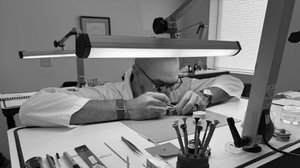
Fun w/ aluminium
The brass dial cutting process is starting to become repeatable. Routinized, even. For what it’s worth, “routinized” may be my least favorite corporate word of all time, but it applies here.
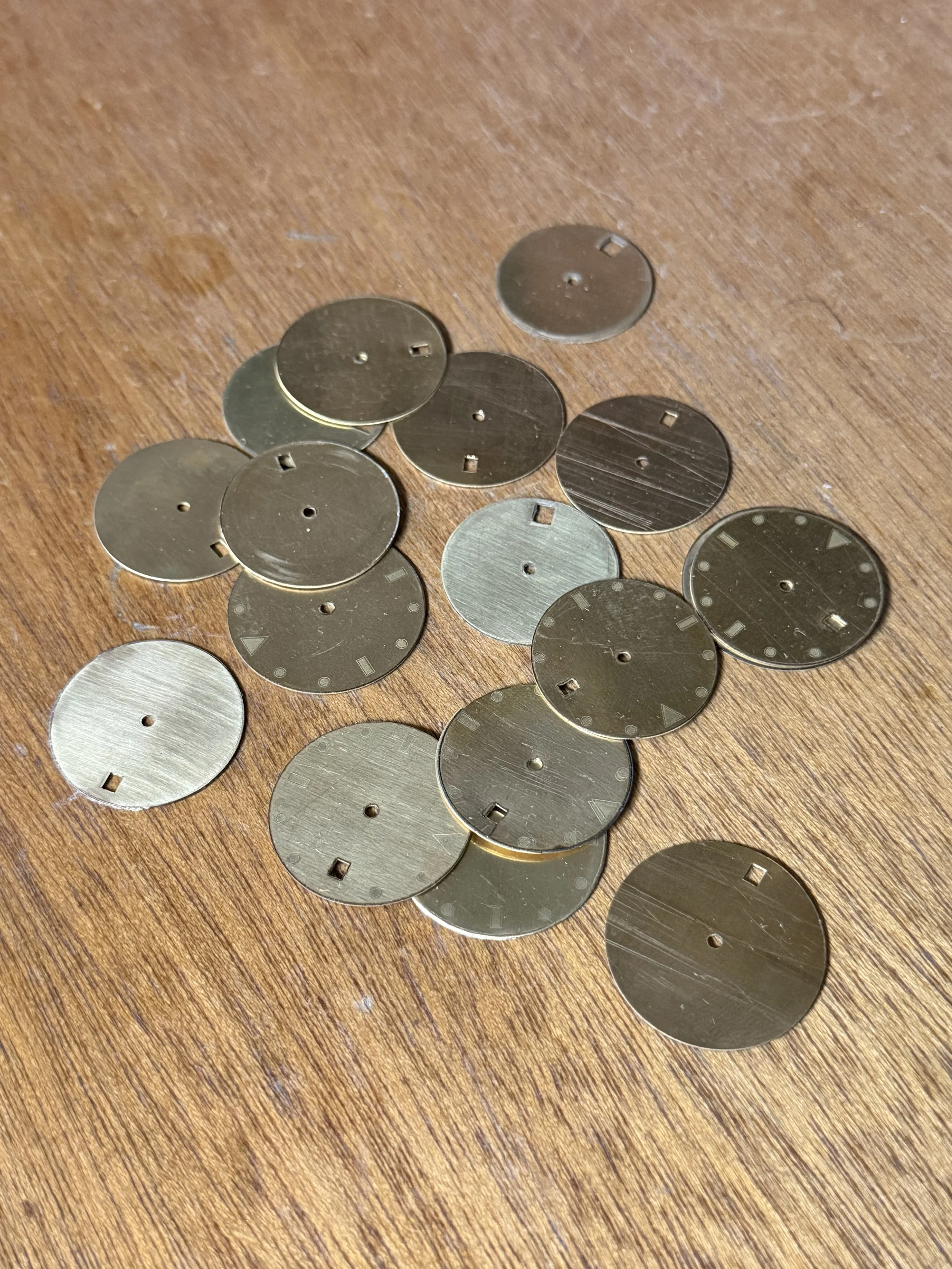
The pile continues to grow
After several rounds of testing, burning edges, resizing files, and wondering why LightBurn dimensions were not translating perfectly to physical output, I spent some focused time calibrating the laser properly. That calibration step made a big difference. Massive thanks to Steve Makes Everything on YouTube for helping me dial this in. His LightBurn calibration content was exactly what I needed at this stage.
With the cutting workflow in a better place, and because it was Friday night, I moved on to something faster and more playful: colored aluminum cards as quick dial prototypes.
I took inspiration from u/fiatjeepdriver_ over on Reddit and started messing around with coated aluminum business cards as a way to test layouts quickly. These are not meant to be final dials. They are fast, inexpensive design studies — a way to see proportions, logo placement, dial text, and date window geometry in actual physical form. The 0.45mm aluminum cards make it easy to test ideas without treating every attempt like a precious object.
This round included a lot of material testing and iteration. Getting more intuitive with negative masking. The results are not perfect yet, but perfection was not the goal. The goal was to move quickly, learn from the output, and have some fun with the process.
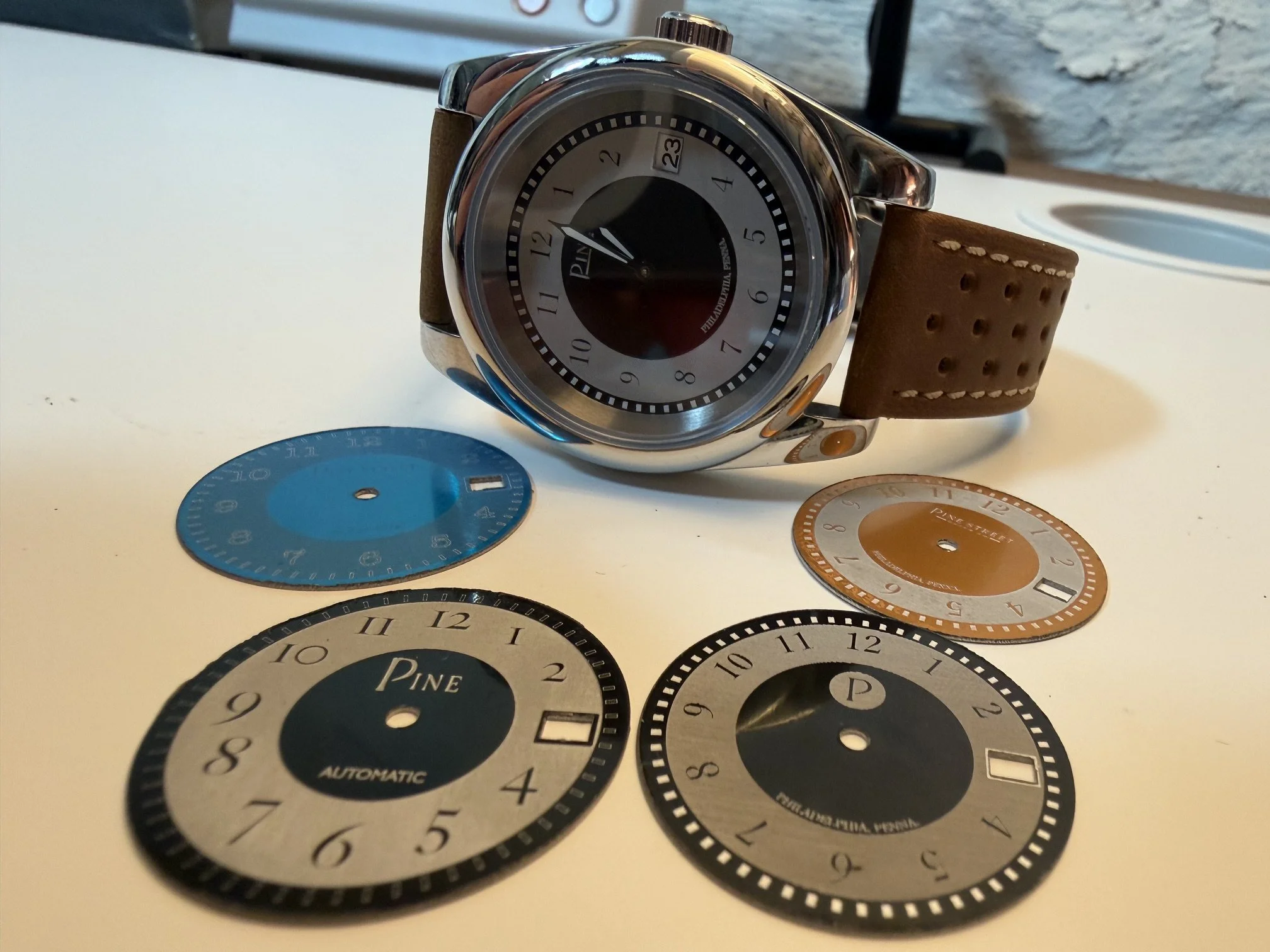
The dial shown here is a 29mm dial for an NH35 movement with 27.4mm visible thanks to the thick rehaut on this case. It does not have dial feet yet, so this is not headed for daily wear. It is also using a set of old hands from the parts bin, minus the seconds hand, which I had already stolen for another build.
Dial feet are probably the next major experiment. I’ve been looking into epoxy versus solder, and I’m curious to test the pros and cons of each method myself. Epoxy seems approachable and forgiving. Solder feels more traditional and mechanically robust, but also less forgiving for a beginner.
While waiting for the pad printer to arrive, I’ve also been researching airbrush setups. Paint and finishing will open up another whole area of trial and error, but that is part of the fun.
For now, the workflow is moving forward: cleaner cuts, better calibration, faster prototypes, more physical feedback.
Now its off to the woods for some clean air and to disconnect over Memorial Day weekend.