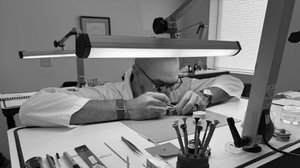
A first try at hands
My own feelings were confirmed when speaking to a watchmaker in Basel. The Rittenhouse dial I've been refining needs hands that belong to it. Not finding anything off-the-shelf that felt right, I’ve decided the only option is to make them. So I guess I am extending this project indefinitely!
The Design
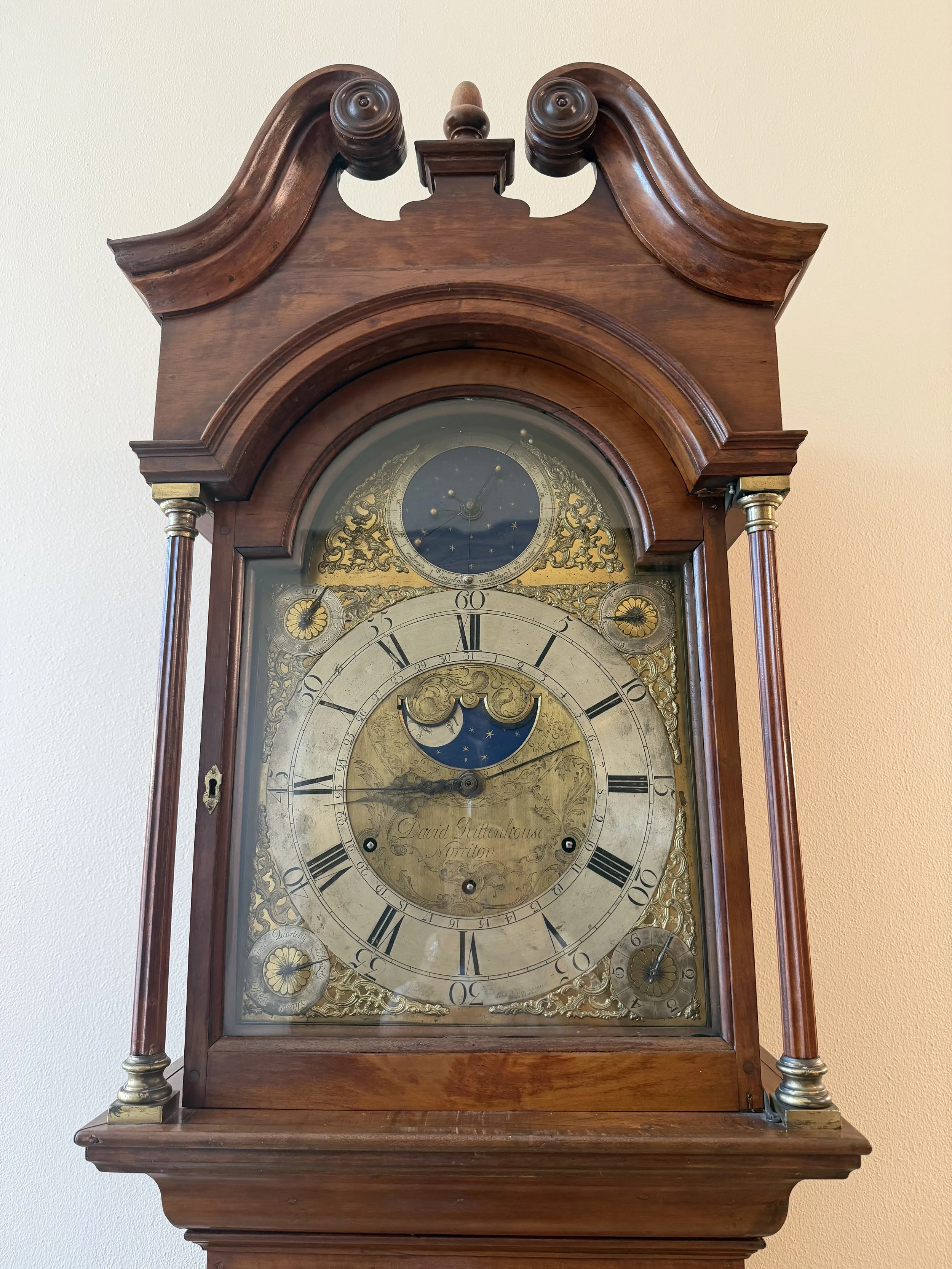
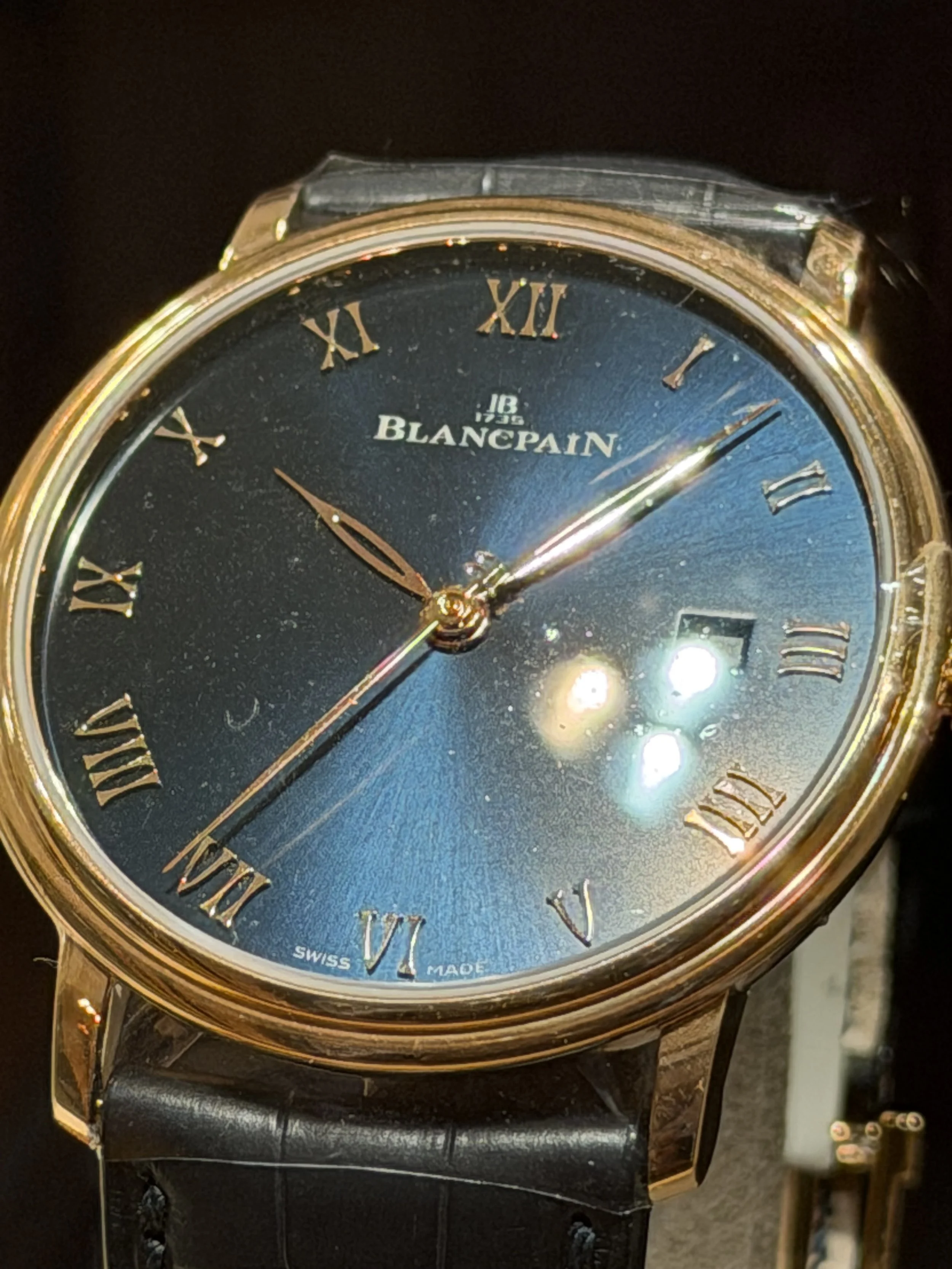
The David Rittenhouse case clock which serves as inspiration has ornate Louis XIV style hands, so my choices on this front represent a conscious break in style that I want to take for this wristwatch. I took some inspiration from the proportion of the big clock hands at the Basel Messe and a Blancpain I was admiring at Zurich airport before heading home. I designed both hands in Lightburn on the plane, laying out the geometry to reach the correct minute and hour positions on the dial. The hour hand would be shorter and wider, with an aperture in the center and the minute hand longer, more tapered, and solid.

Fabrication Strategy
Starting with my brass sheet that I use for dials, I decided to remove height through laser engraving before cutting the profile. I was hoping that a thinner sheet would cut with less power, decreasing risk of warping and result in a thin and light enough hand that the movement could handle. These hands ended up at .33mm. I am not sure if this is good or not. I need to pull out some commercially sourced hands and the calipers and scale and do a bit of research here.
For the hand holes, I took an intentionally undersized approach. Rather than drilling or cutting to the final diameter, I cut them deliberately small, planning to use my staking set to expand the hole to size. The idea was simple: as the staking set pushes the hole larger, the underside of the brass would dome slightly, creating a friction collar—a mechanical fit that would hold the hand securely on the pinion.
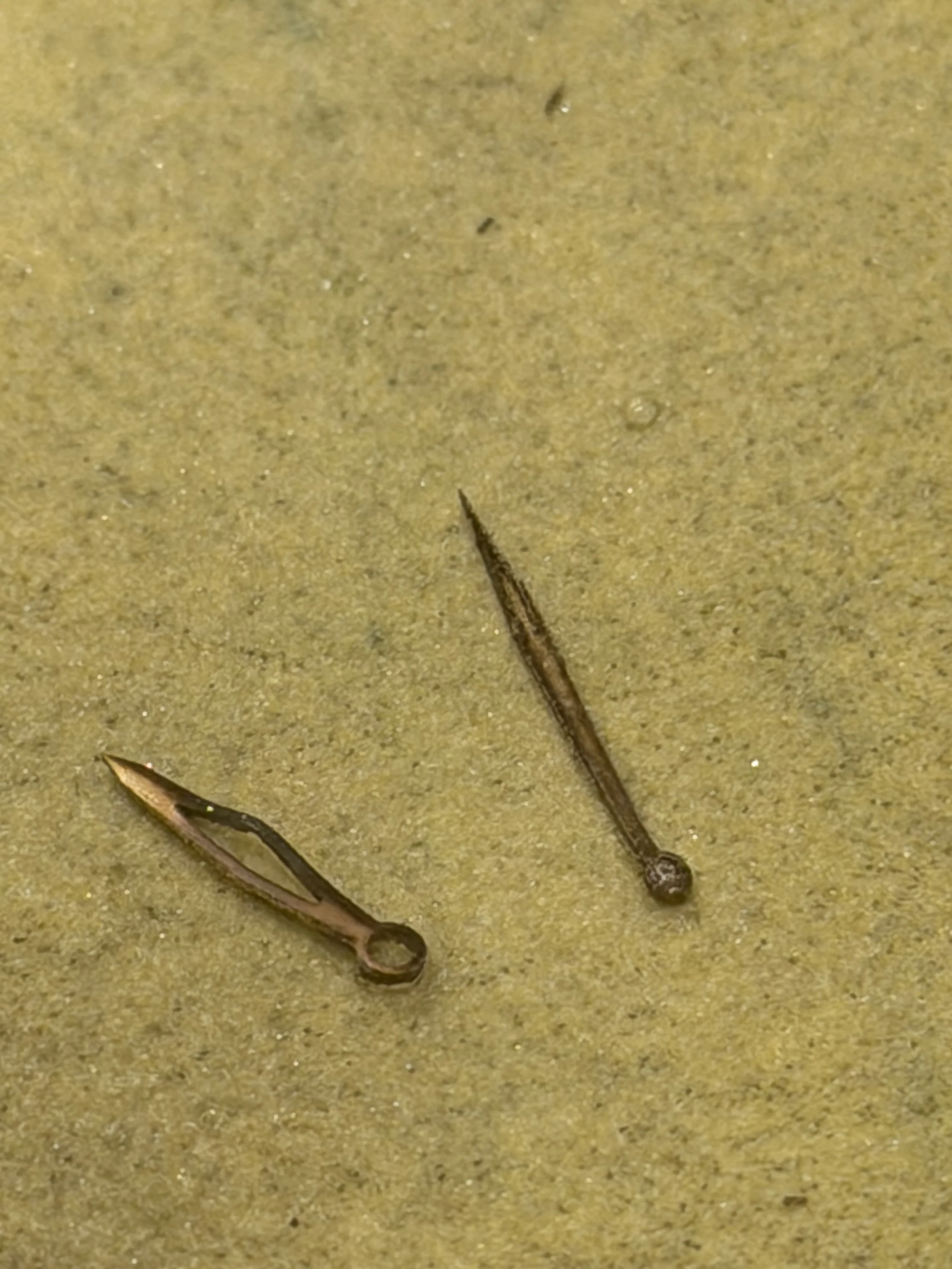
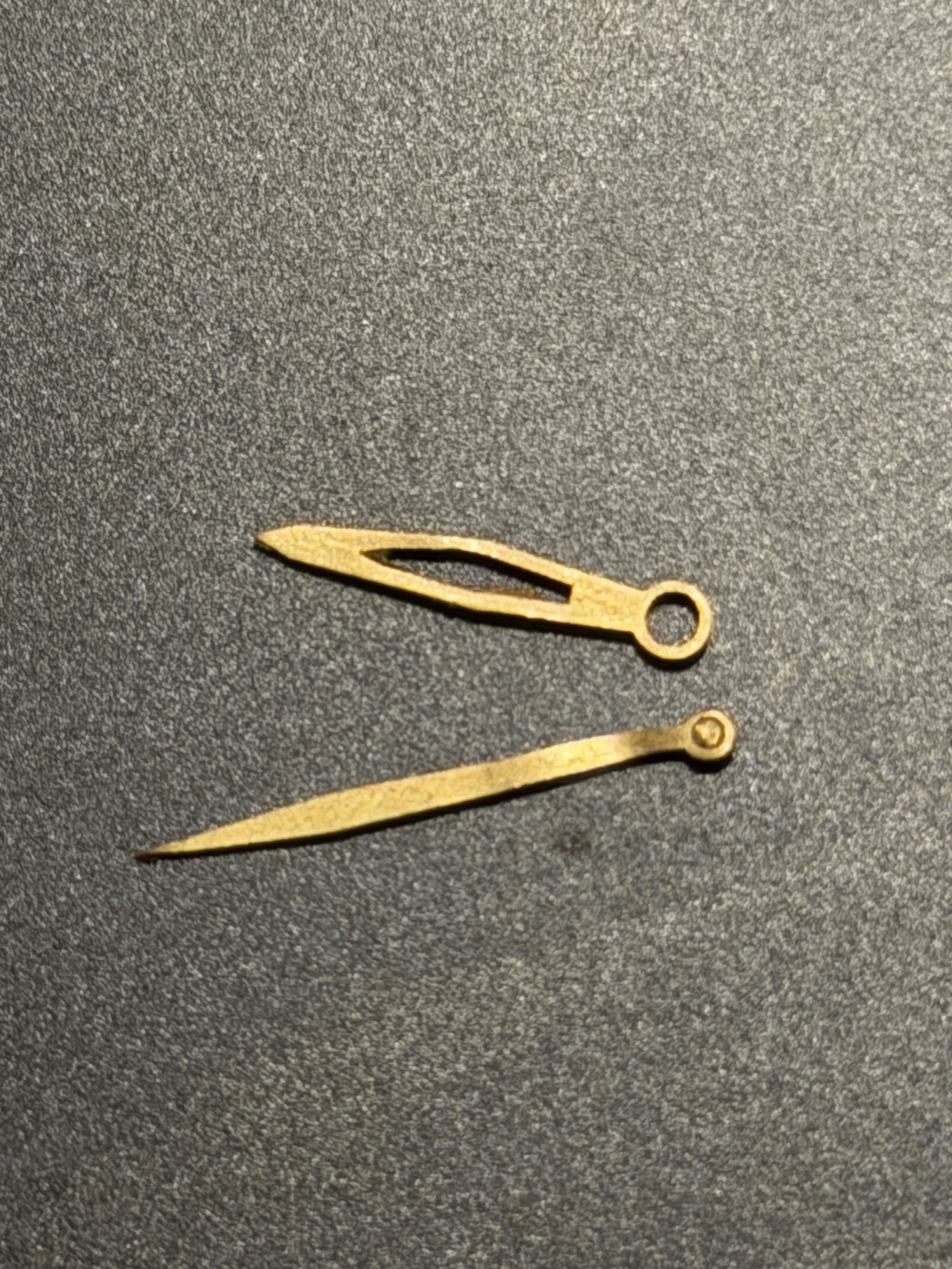
The hands as the came off the laser and out of the brass sheet - but not without a fight…
The Test
I moved to the sink to clean them up. I gave both hands a quick scrub with Barkeeper's Friend. Even after just that minimal finish, they transformed. The oxidation fell away, and the raw brass showed a texture and warmth I am excited about. While the shapes aren’t quite right and the laser cutting steps clearly did some damage, they looked generally like watch hands.
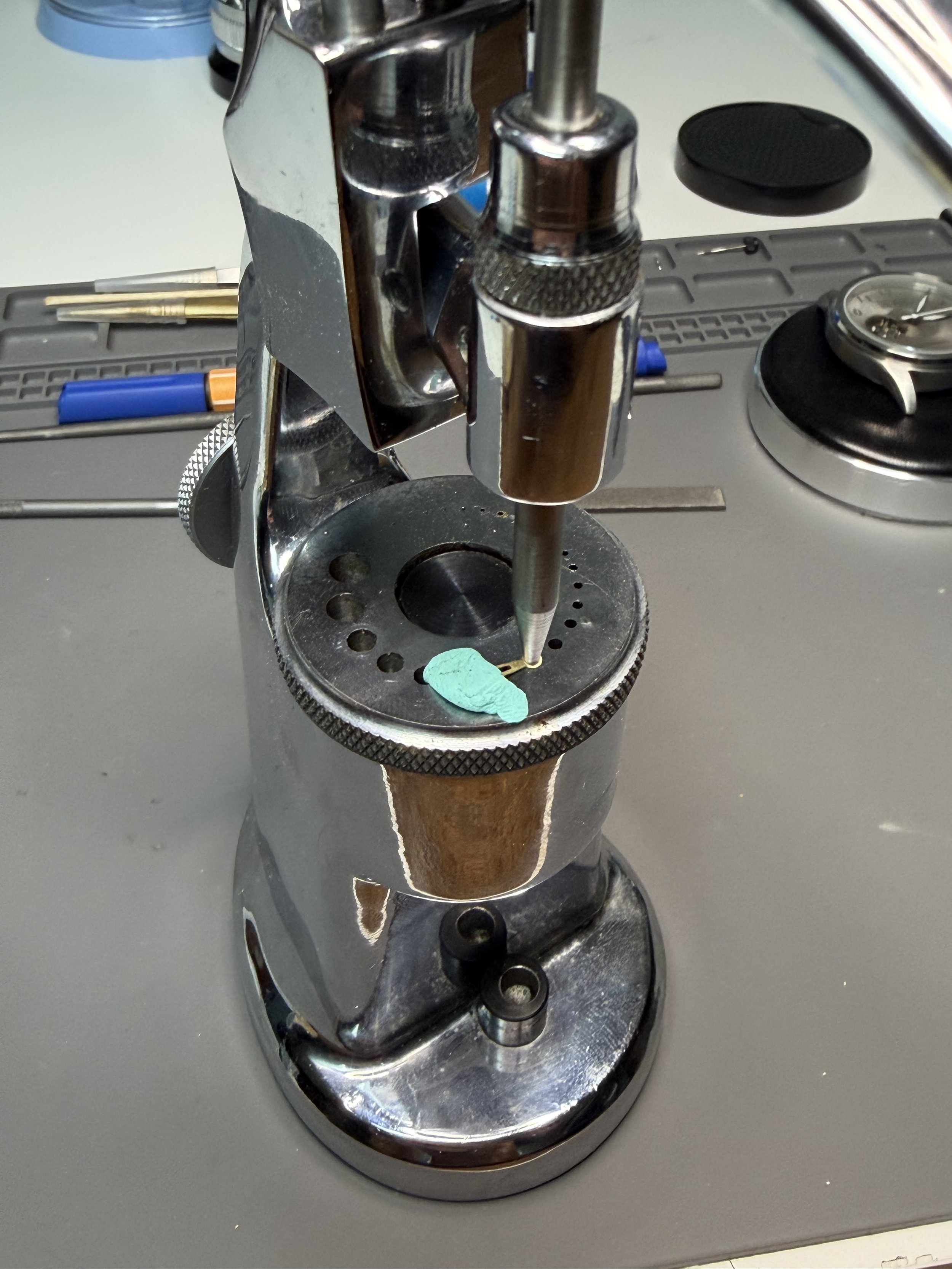
Moving to the staking set, the hour hand responded well. The hole expanded cleanly to the correct diameter. But when I inspected the underside, the collar was insufficient—barely a suggestion of the doming I'd hoped for. I suspect it would move too freely on the pinion, as there may not be enough friction to hold it.
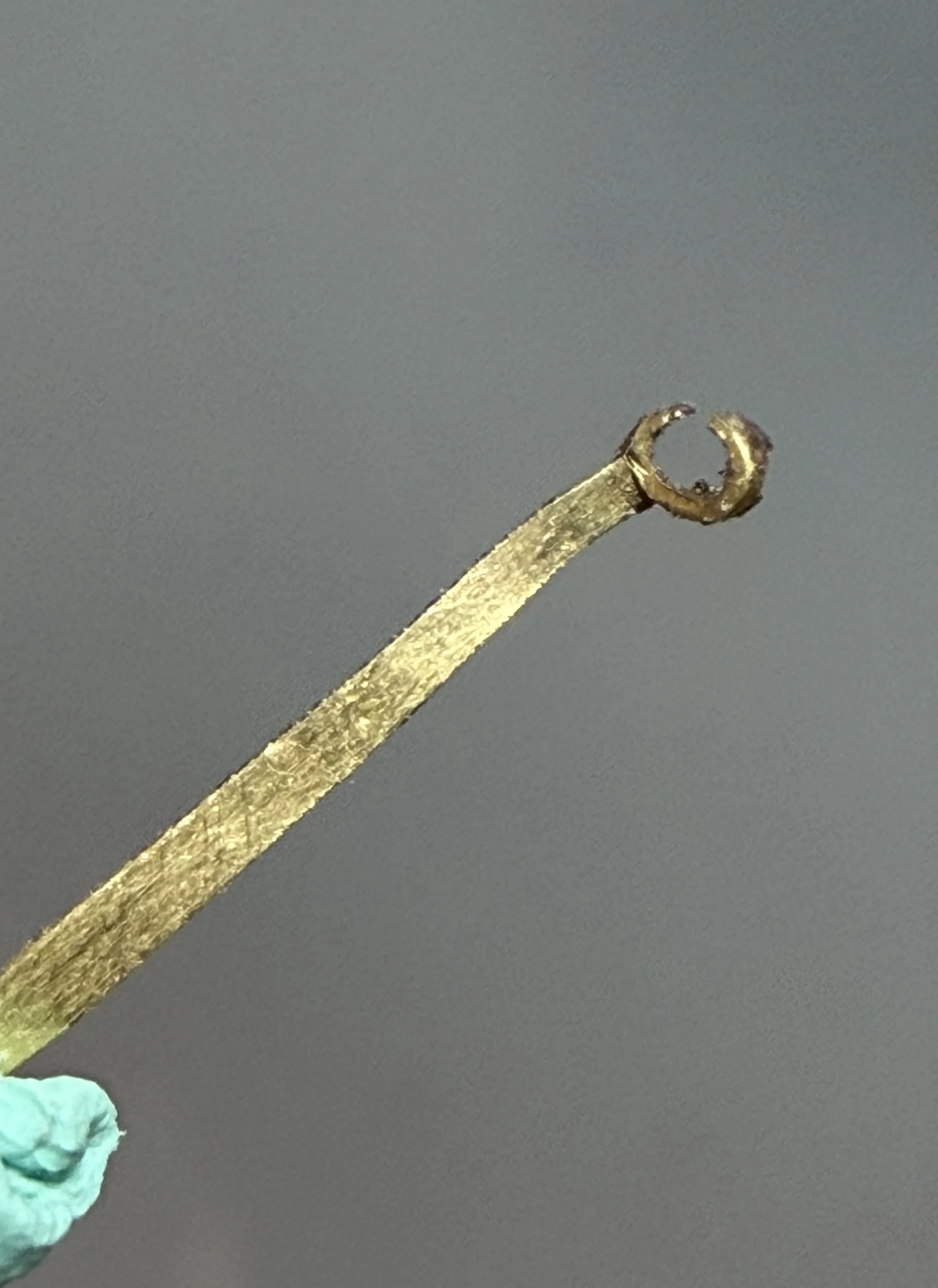
The minute hand broke. As I worked the staking punch gently, the border around the hole gave way. The laser cut hole didn’t separate easily and the pressure to extract that plug caused the thin border to break.
Next Iteration
Two clear paths forward.
First the holes: start with a smaller hole diameter on the hour hand, giving the staking set more material to work with as it forms the collar. Widen the border around the minute hand opening to give it the structural strength it needs.
Second, I might consider using a jeweler’s saw to remove the hands from the sheet as the laser might be too aggressive for such delicate parts, let’s see.
I didn’t bother polishing these but since I have them, I might see if some form of anglage looks good or experiment with other finishes.
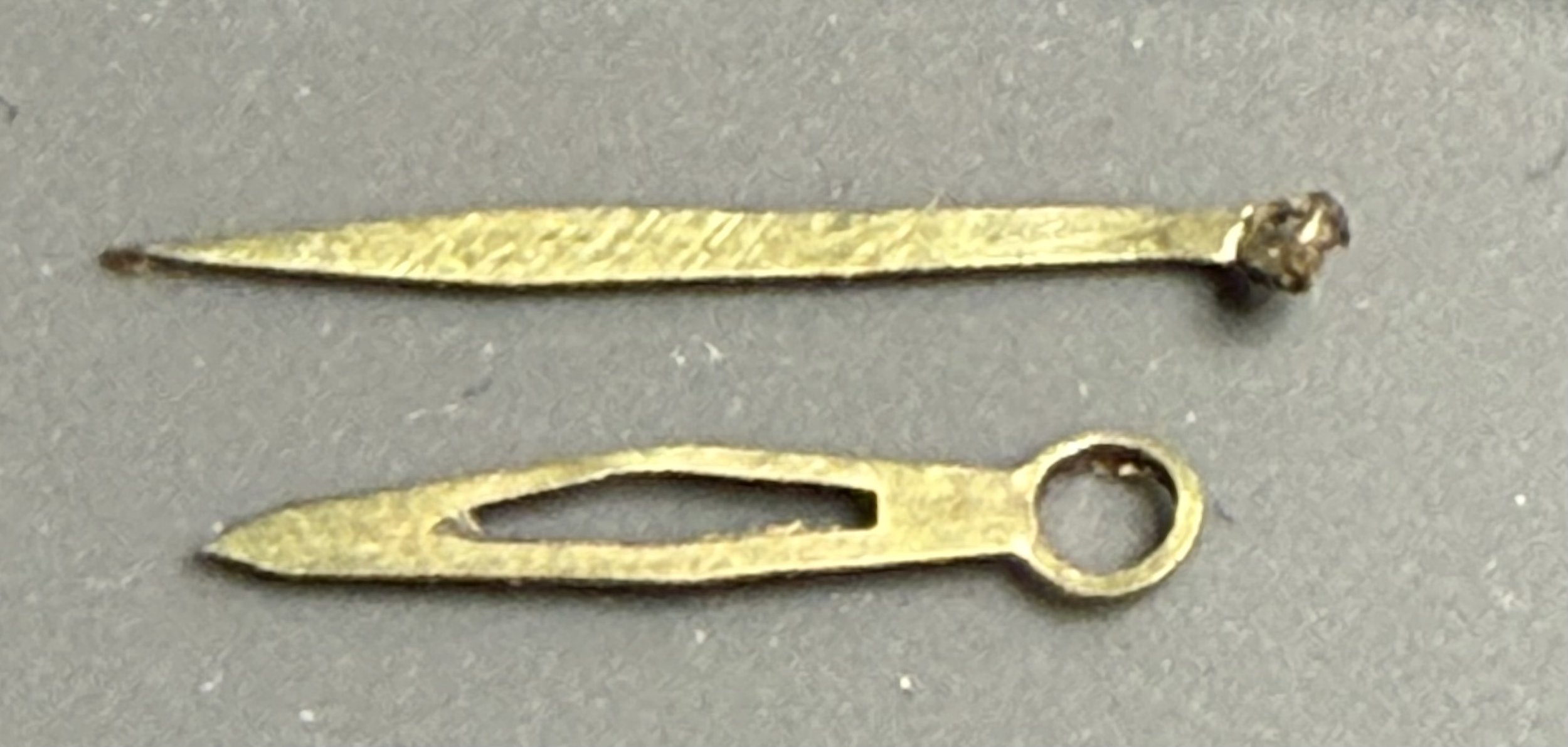
More iterations lay ahead…