Learning lathes
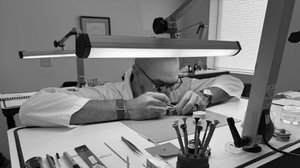
This week, I spent three days at the NAWCC in Columbia, PA taking a lathe class taught by Philip Stoller of the Gem City College School of Horology.
I’ve had a watchmaker’s lathe at my bench for a while. I got it from a clockmaker who was winding down his watch repair work and didn’t need it anymore. It carries a Reese mark, which, as best as I’ve been able to determine, connects it to Johnstown, Pennsylvania, sometime in the early 20th century. I could tell it meant a lot to him. And it felt right to take this step in proper learning before getting to work with this lathe.
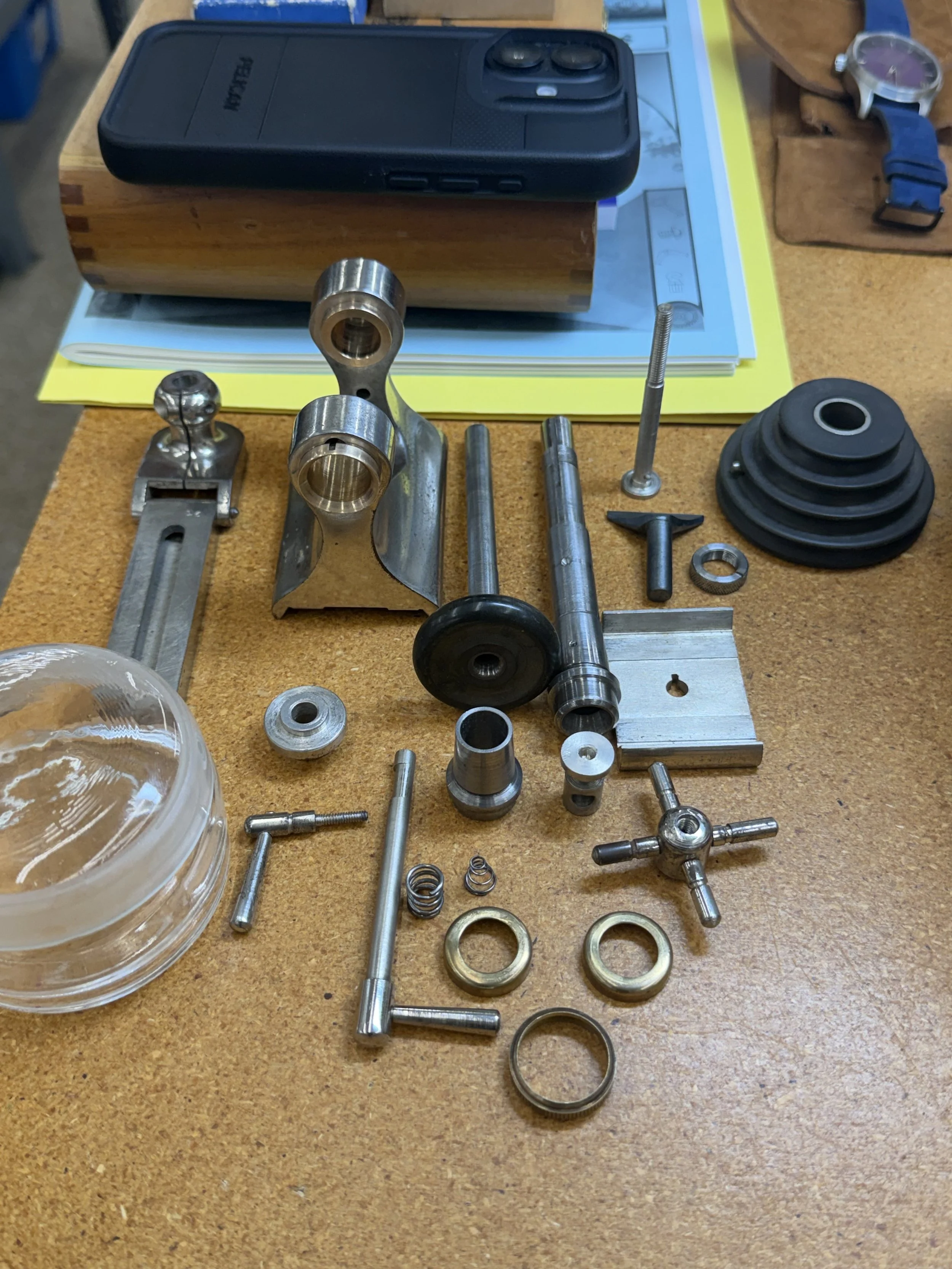
Philip had us start the class by taking our lathes apart.
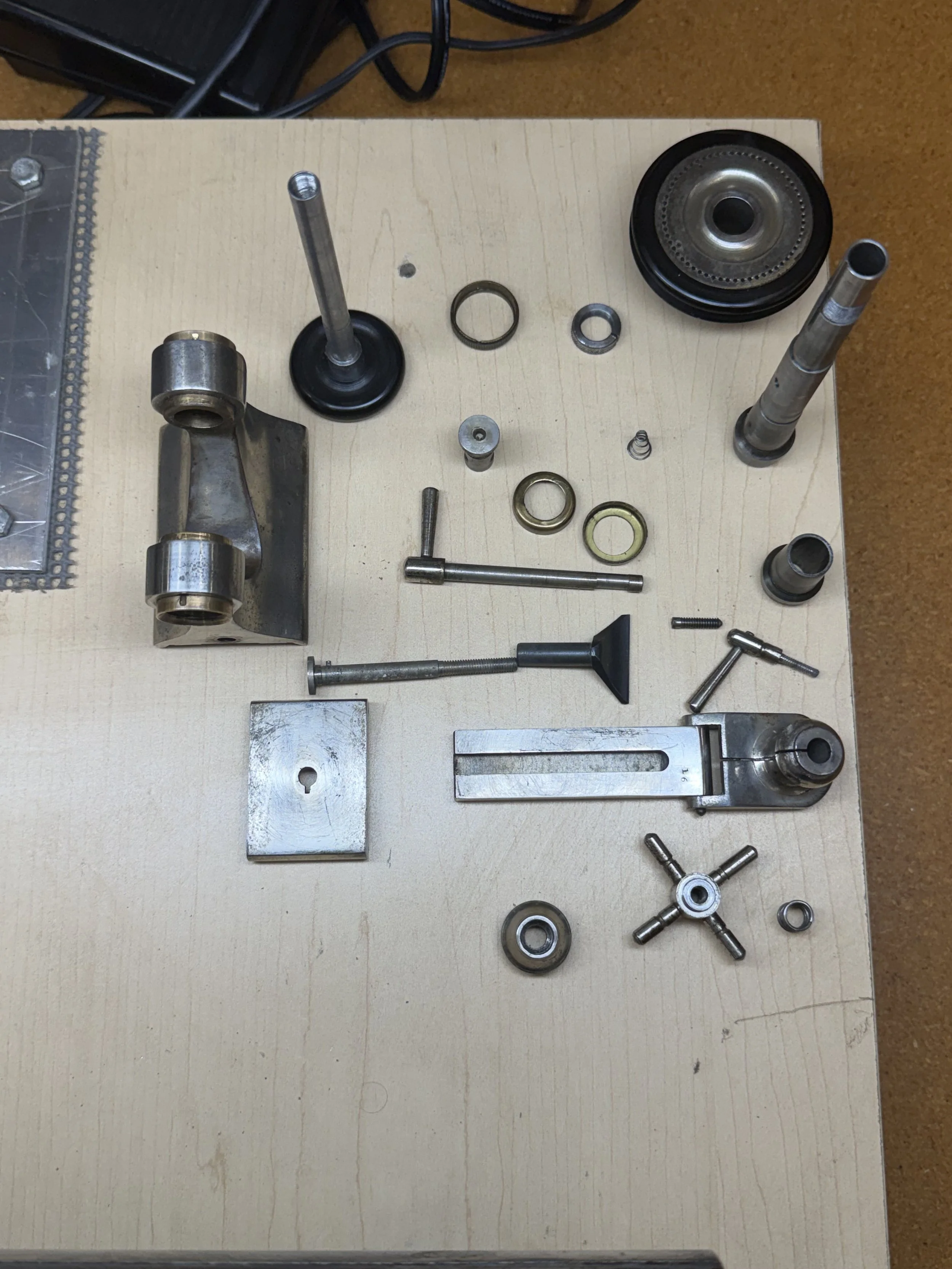
As we worked, he walked through each component, what it did, how it interacted with the other parts of the lathe, and what we should be paying attention to along the way.
Once everything was apart, we started cleaning. Parts went through a degreasing solution, with plenty of scrubbing where needed, followed by the ultrasonic cleaner, rinses, and finally a hot box to make sure everything was completely dry.
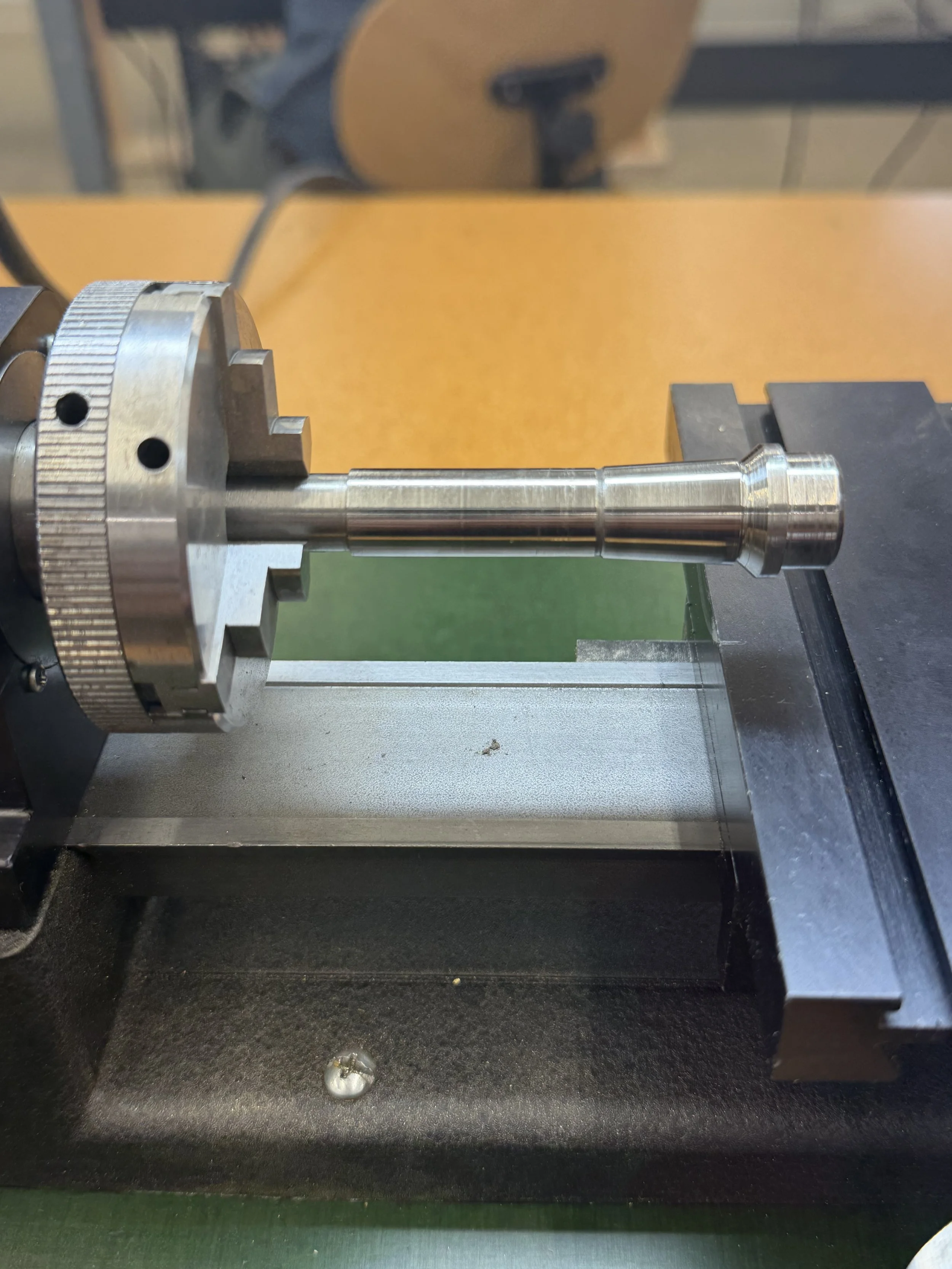
Before reassembly, we polished the spindle and other surfaces that move against one another. We held the parts in the three-jaw chuck of a Sherline lathe and used buffing sticks to clean up the bearing surfaces before oiling and putting everything back together.
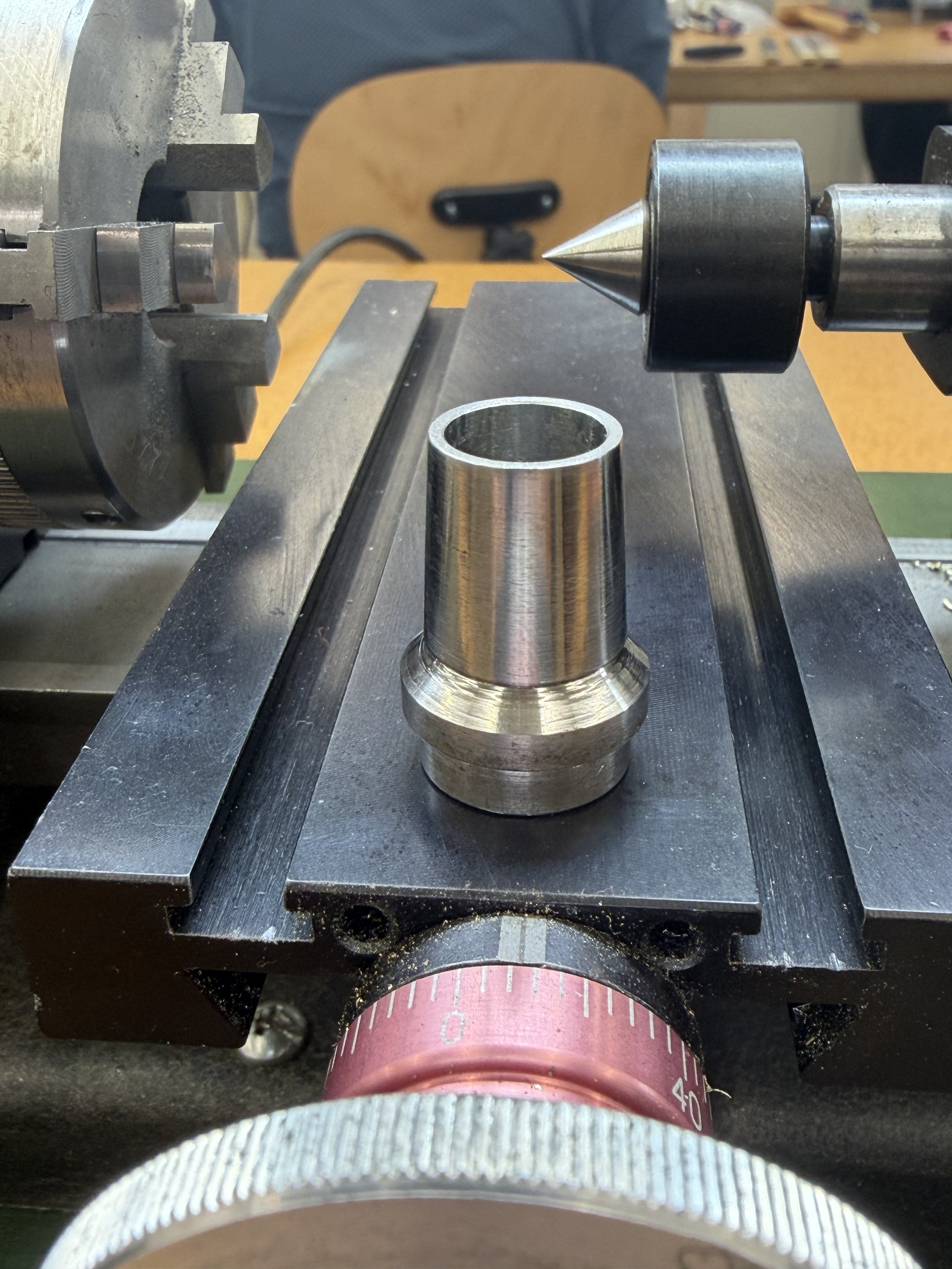
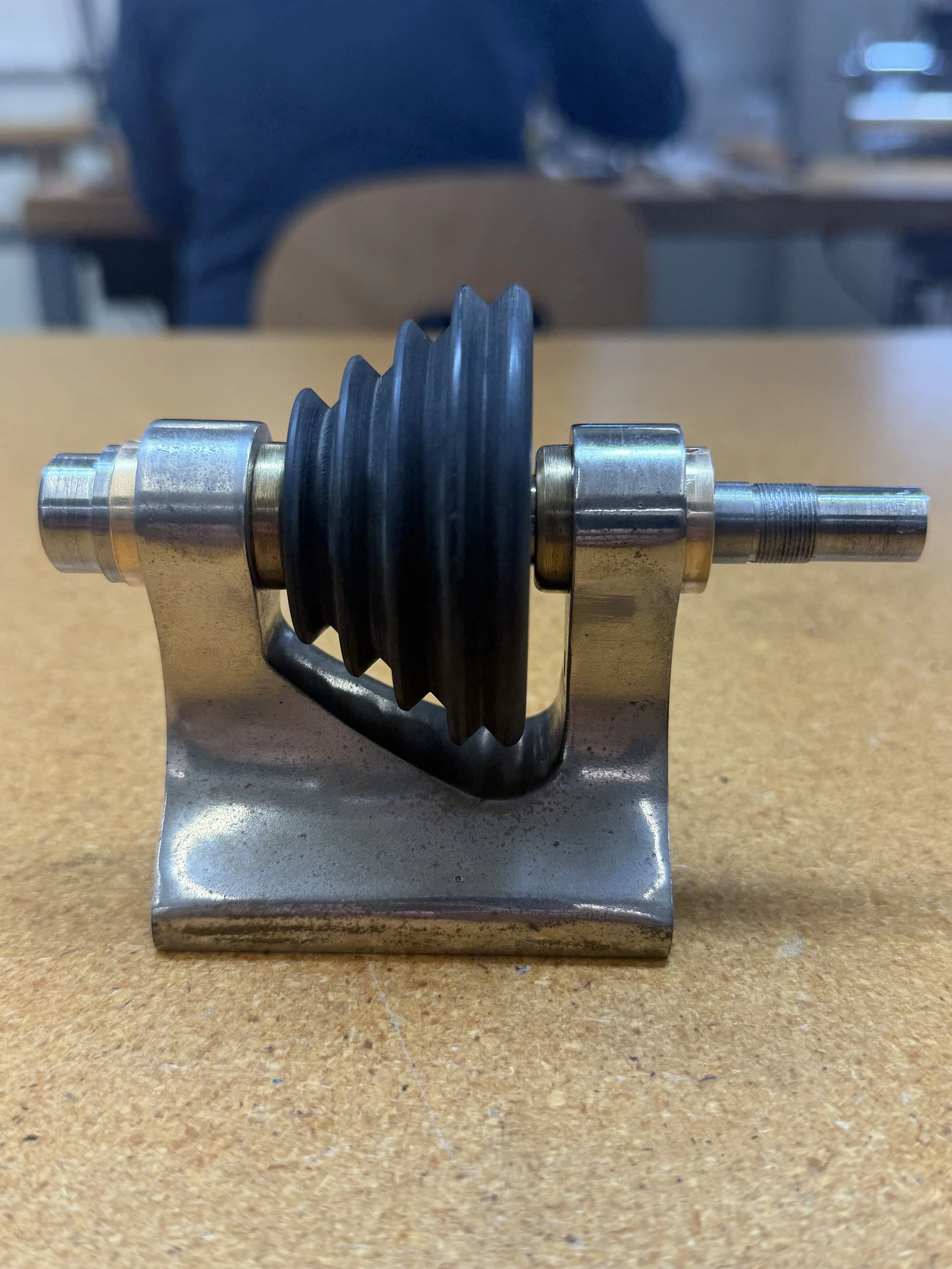
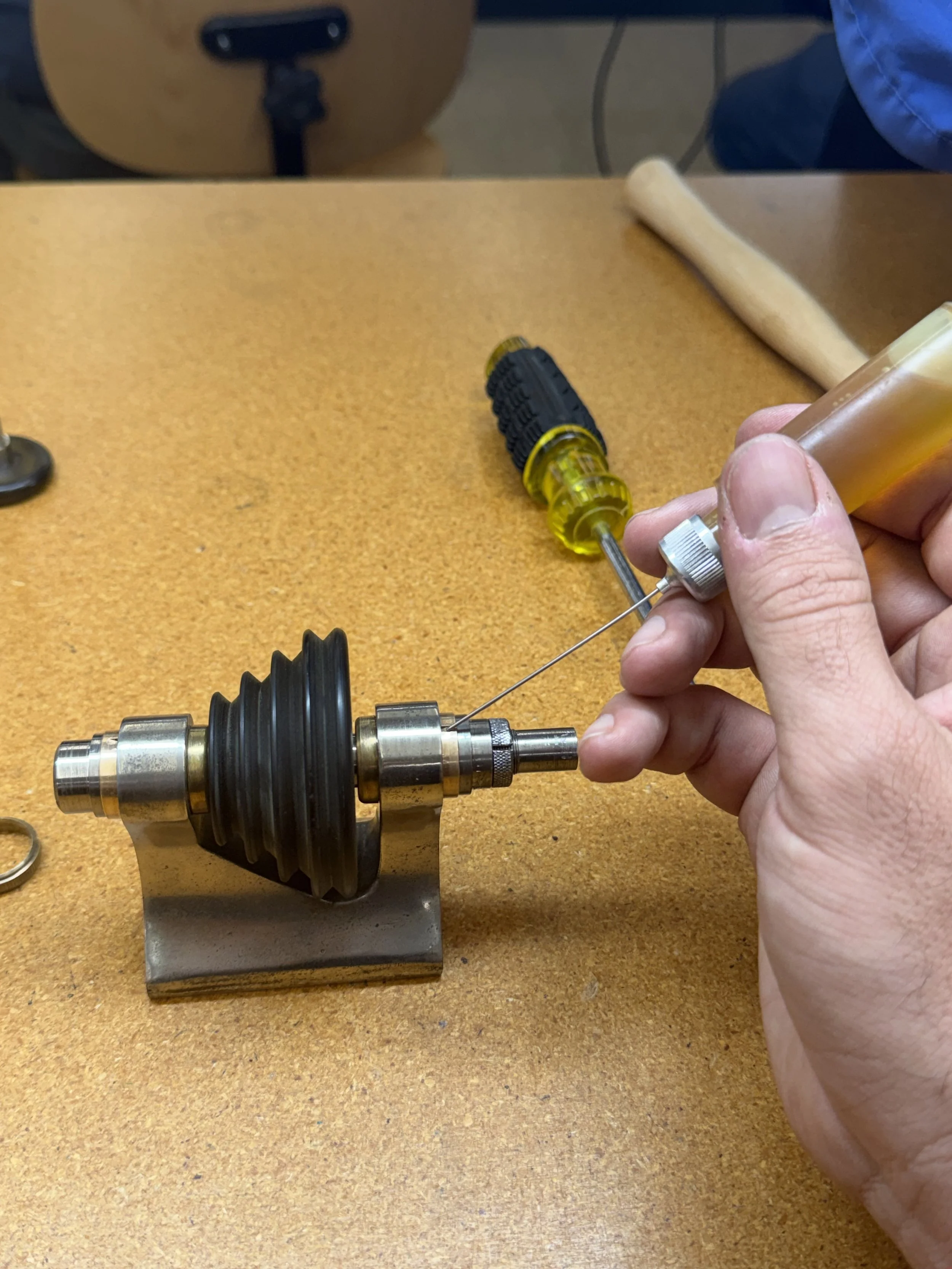
Then we practiced welding lathe belts and moved on to the motors.
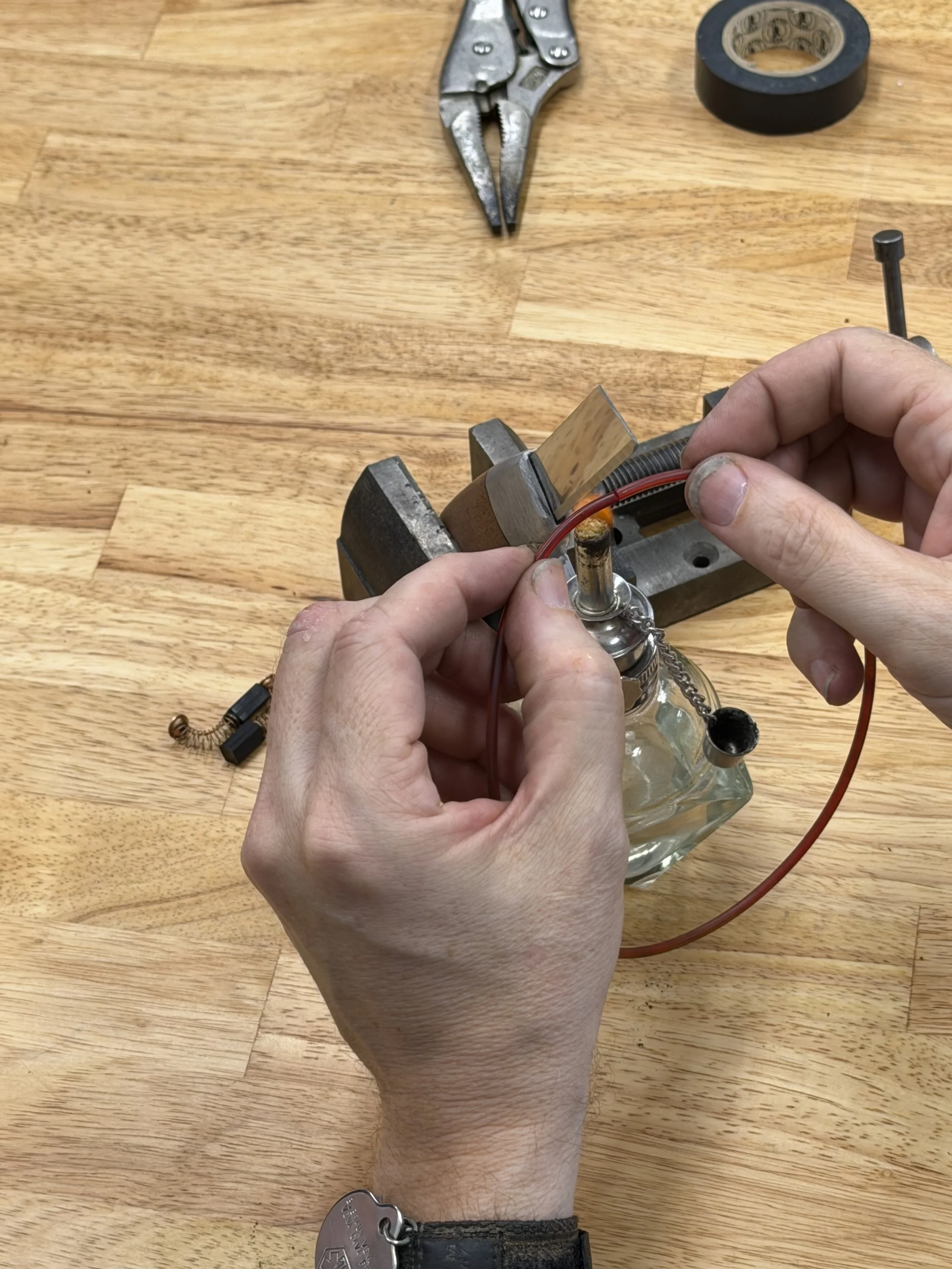
One of the best parts of the class was the variety of equipment everyone had brought with them. There were different lathes, motors, accessories, and solutions to problems, so working through someone else’s setup often taught you almost as much as working on your own.
The motors were no exception. A few of us had Hamilton Beach motors that were more than 100 years old.
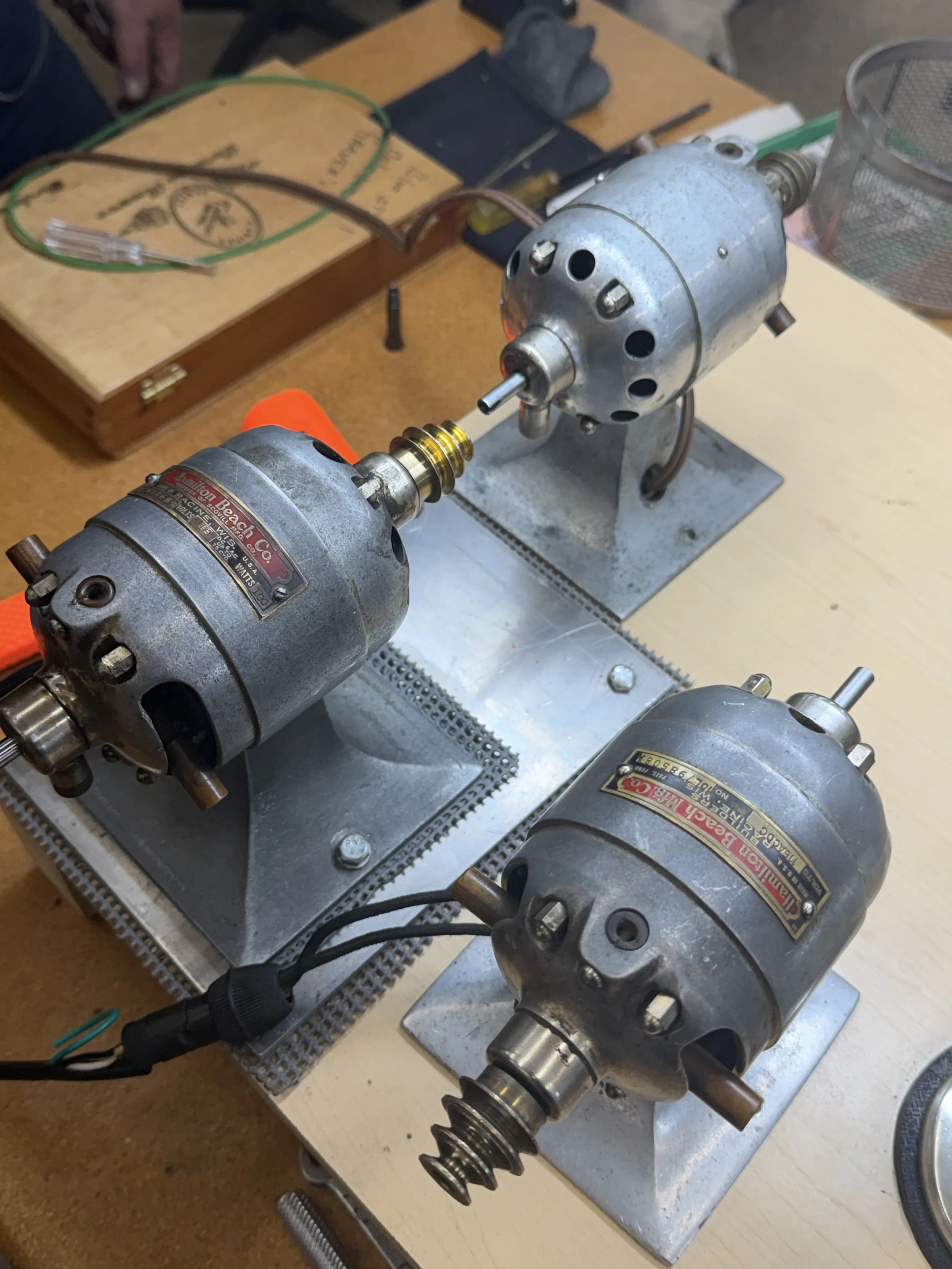
Mine needed a lot of degunking.
We cleaned the motor, filed the commutator back to a bright conductive surface, polished the bearings, re-oiled everything, and put it back together. Then we serviced the foot pedals and finally got to fire everything up.
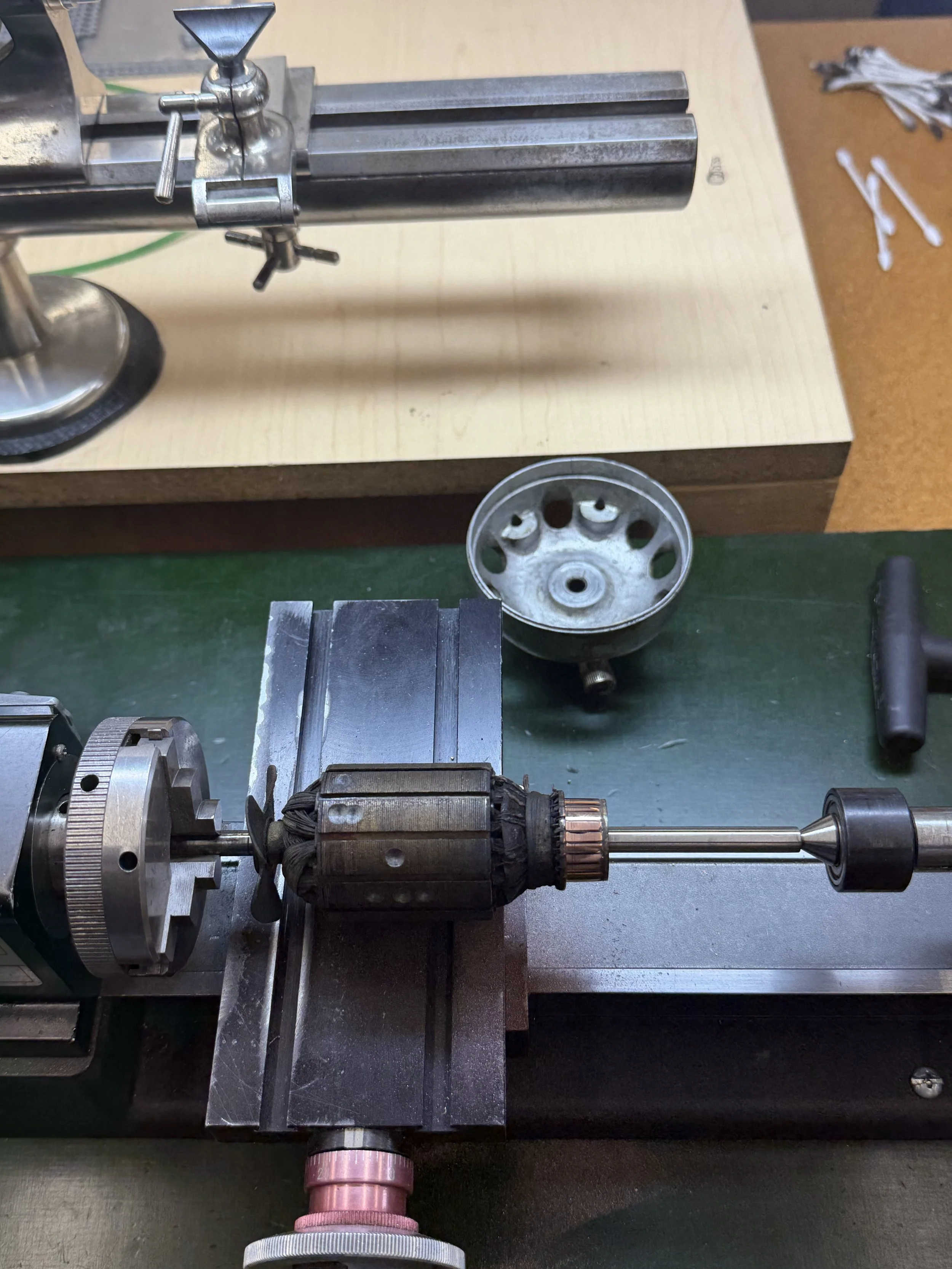
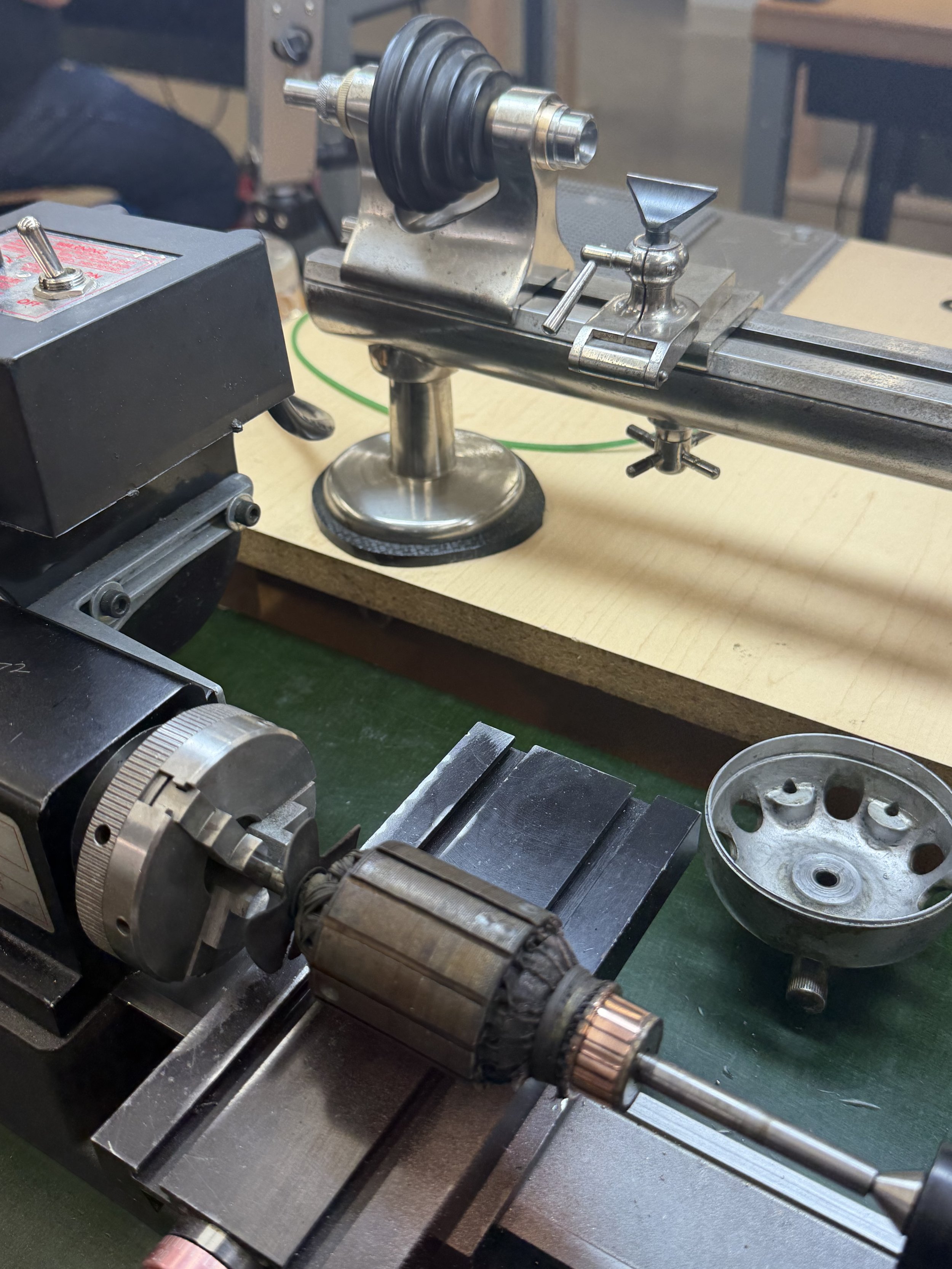
Mine developed a pronounced rattle at higher speed that the whole shop noticed.
For a moment, I was pretty sure I had taken apart a functioning hundred-year-old motor and turned it into a non-functioning hundred-year-old motor.
I tore things back down, checked connections and tightened everything again. Eventually, I found the problem. It was a loose screw connecting the lathe to its pedestal.
Nothing broken.
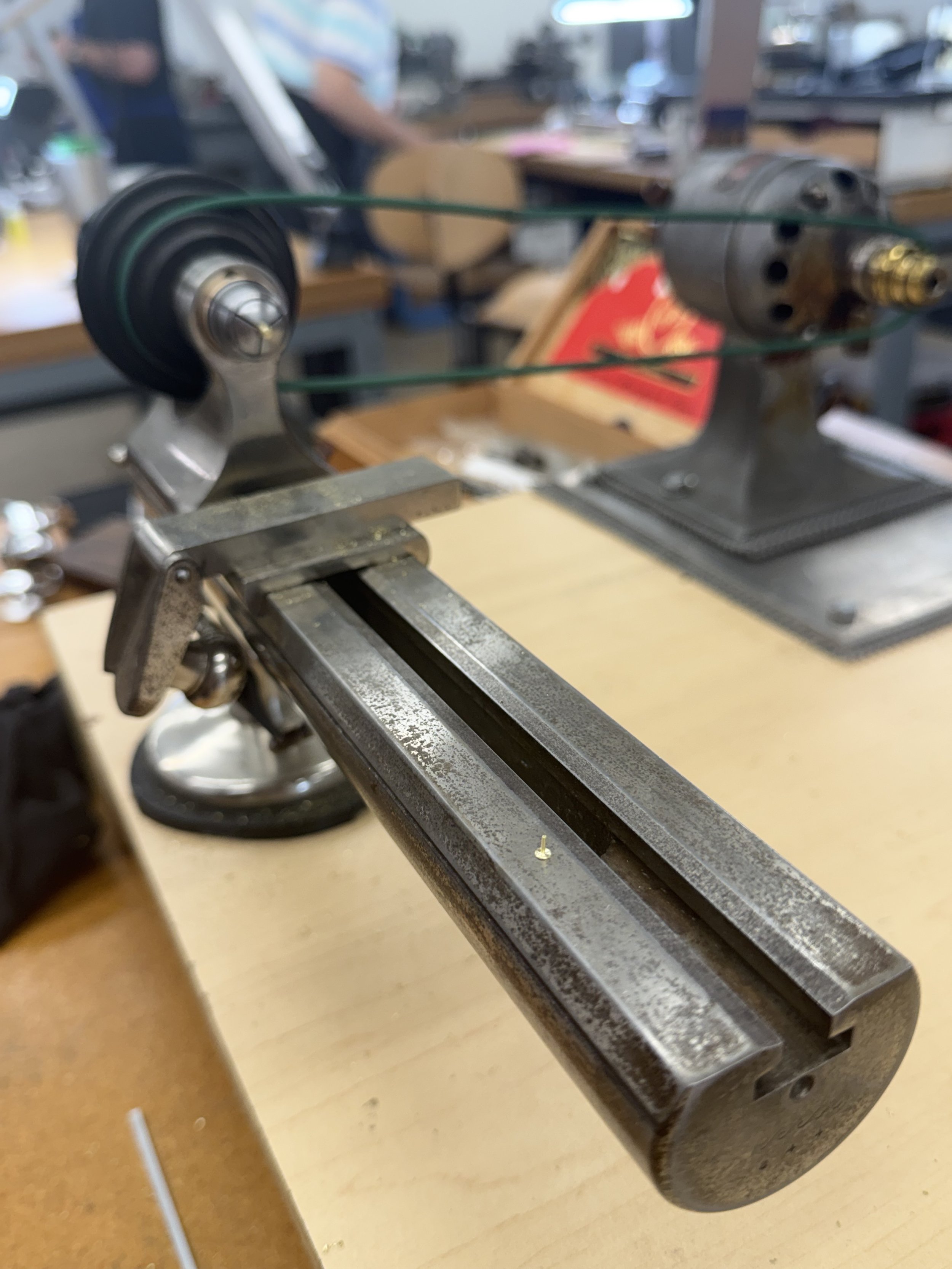
On day two, we did almost all of it again.
This time we each grabbed one of the NAWCC’s old lathes from the donation room and went through the same process. Repeating everything helped reinforce what we had learned the day before, and it also meant a few more of the museum’s donated lathes were getting cleaned, serviced, and put back into operating condition for future educational use.
We also got out of the classroom for a while.
Rory McEvoy (@pendulumgeek), took us through the NAWCC museum and gave an impromptu talk about wheel cutting throughout horological history. That led into a really interesting conversation about restoration versus conservation and the decisions involved in determining whether an old horological object should be returned to function or preserved as it exists.
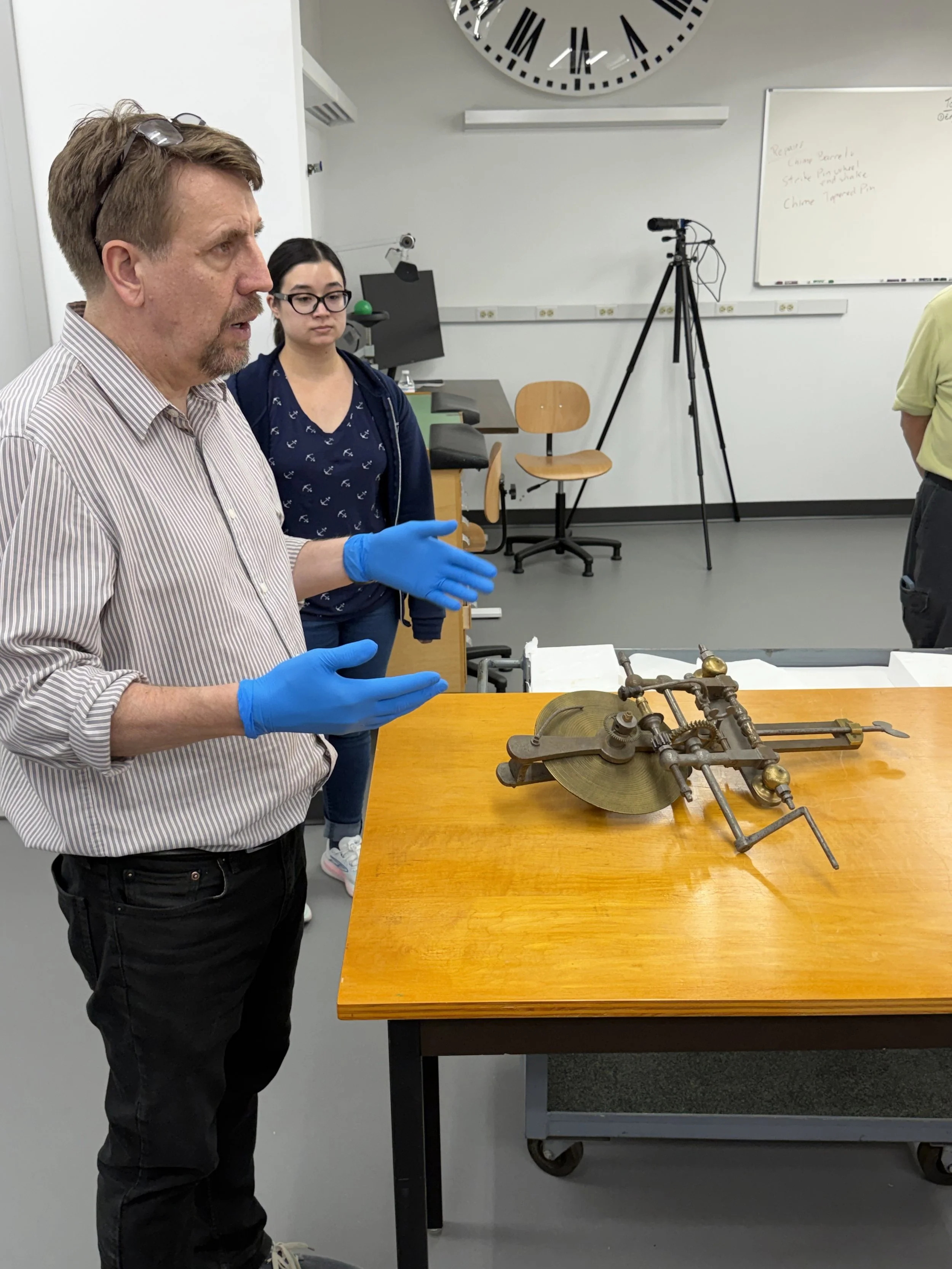
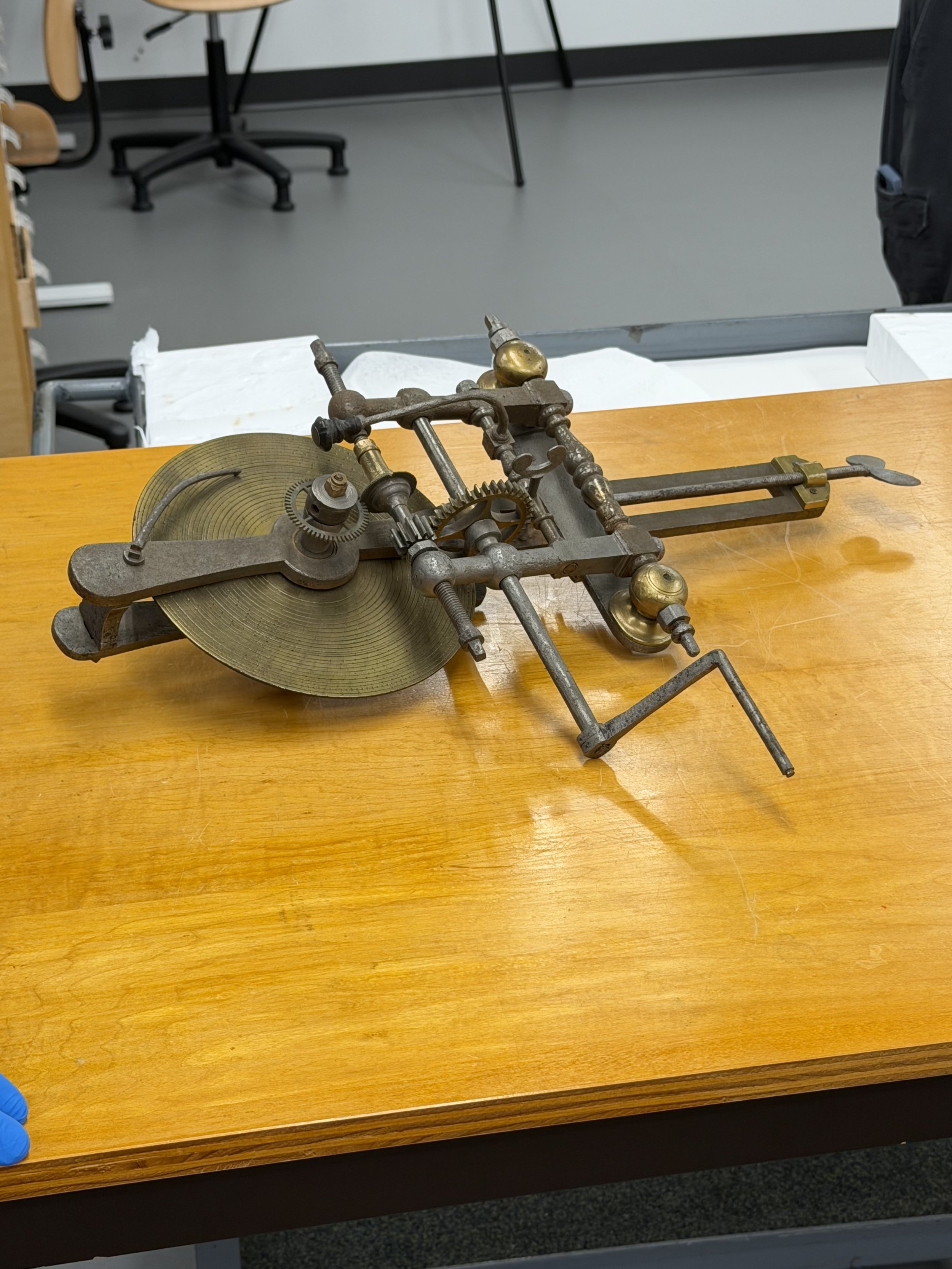
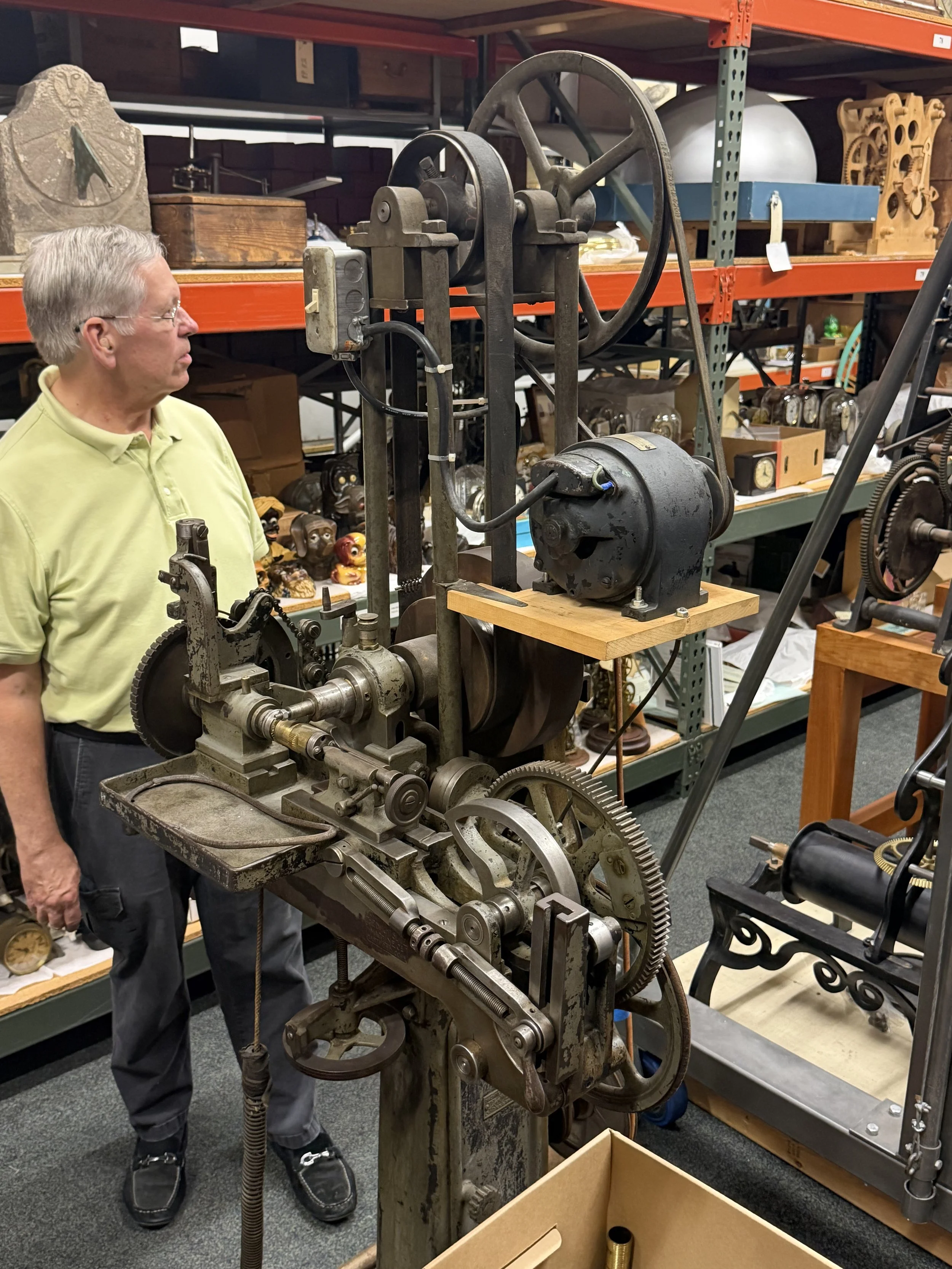
We finished with Quincy, the enormous street clock from Illinois that was recently restored and installed inside the museum. Coincidentally, Quincy Illinois is also where Philip teaches at Gem City.
After a quick trip through the archives and library, and the inevitable purchase of a few books from the bookstore, we went back to the classroom and started sharpening gravers.
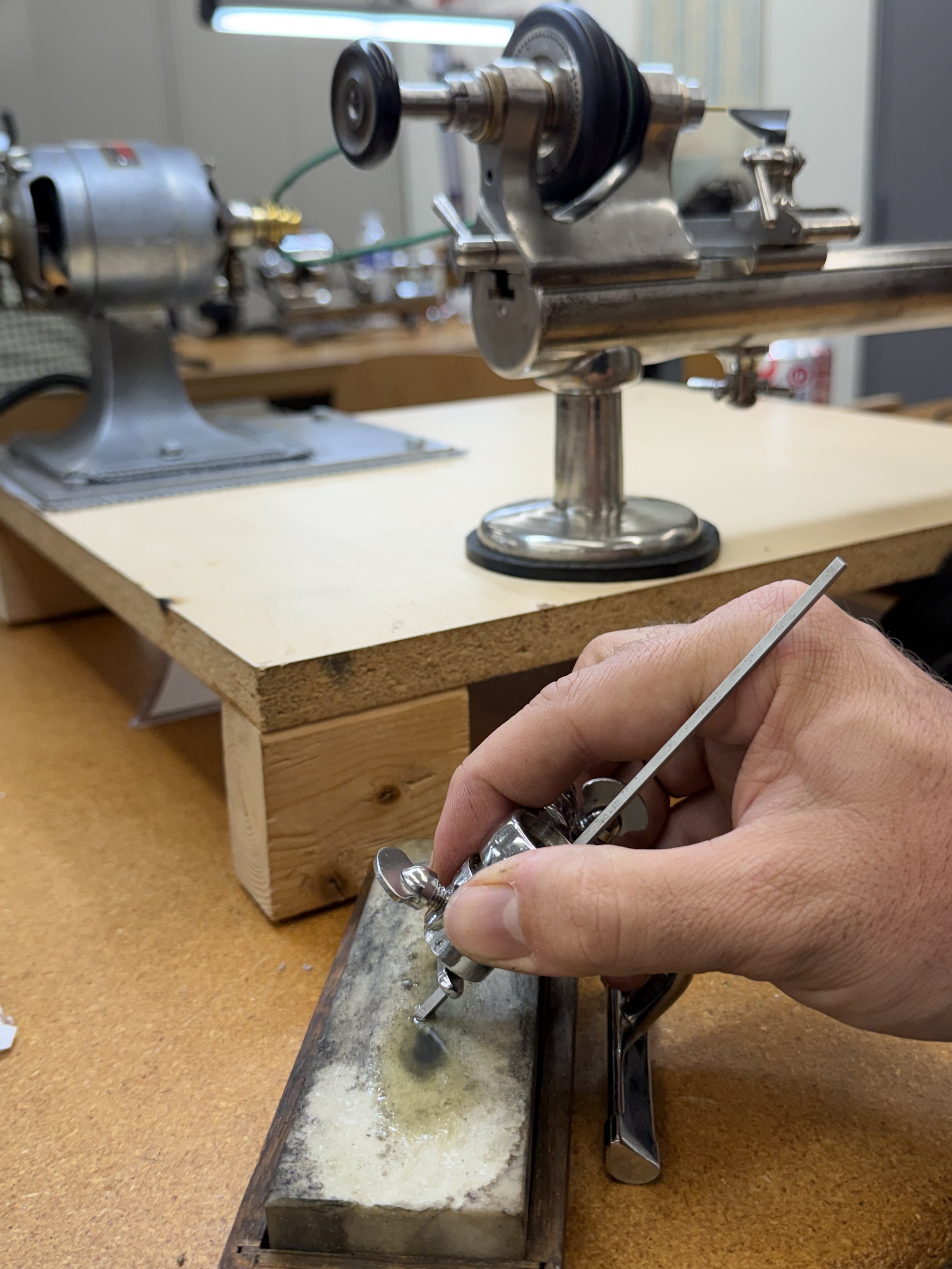
Day three got off to a good start, carpooling in fellow student’s (@clockspot) classic Miata, a car that has transported tall clocks across Pennsylvania with the roof down and the passenger seat removed.
Once we were back at the benches, Philip gave us a few exercises but also encouraged everyone to pick something they actually wanted to try making.
I picked dial feet.
The first one went okay.
I overshot my target diameter by 0.06 mm, then flipped the part around in the collet to polish the bottom of the pad and promptly snapped it off.
The next one went better.
With guidance from Philip and my bench mate Sam, I started getting a better feel for the graver and eventually ended up with my first pair of turned dial feet.
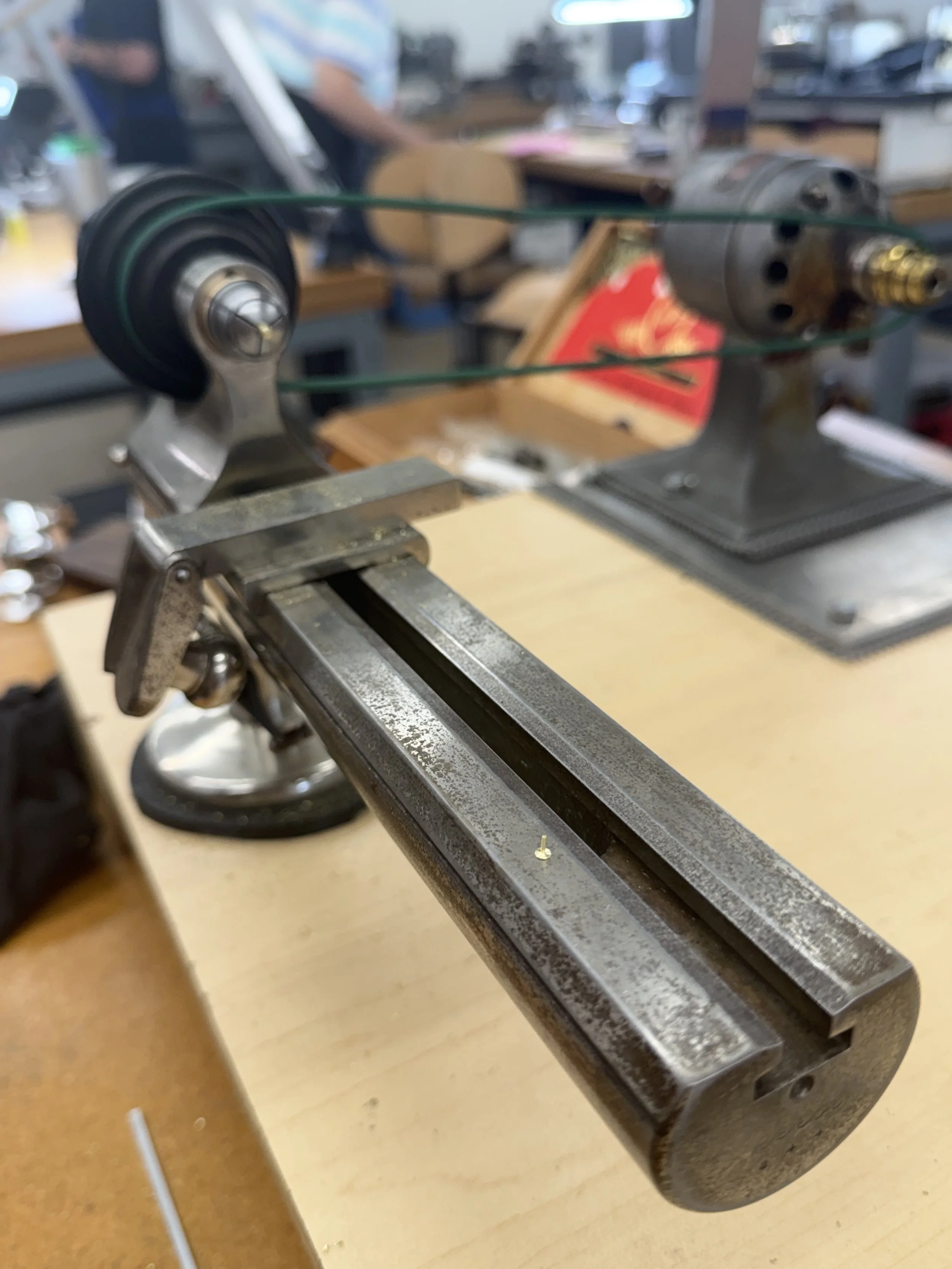
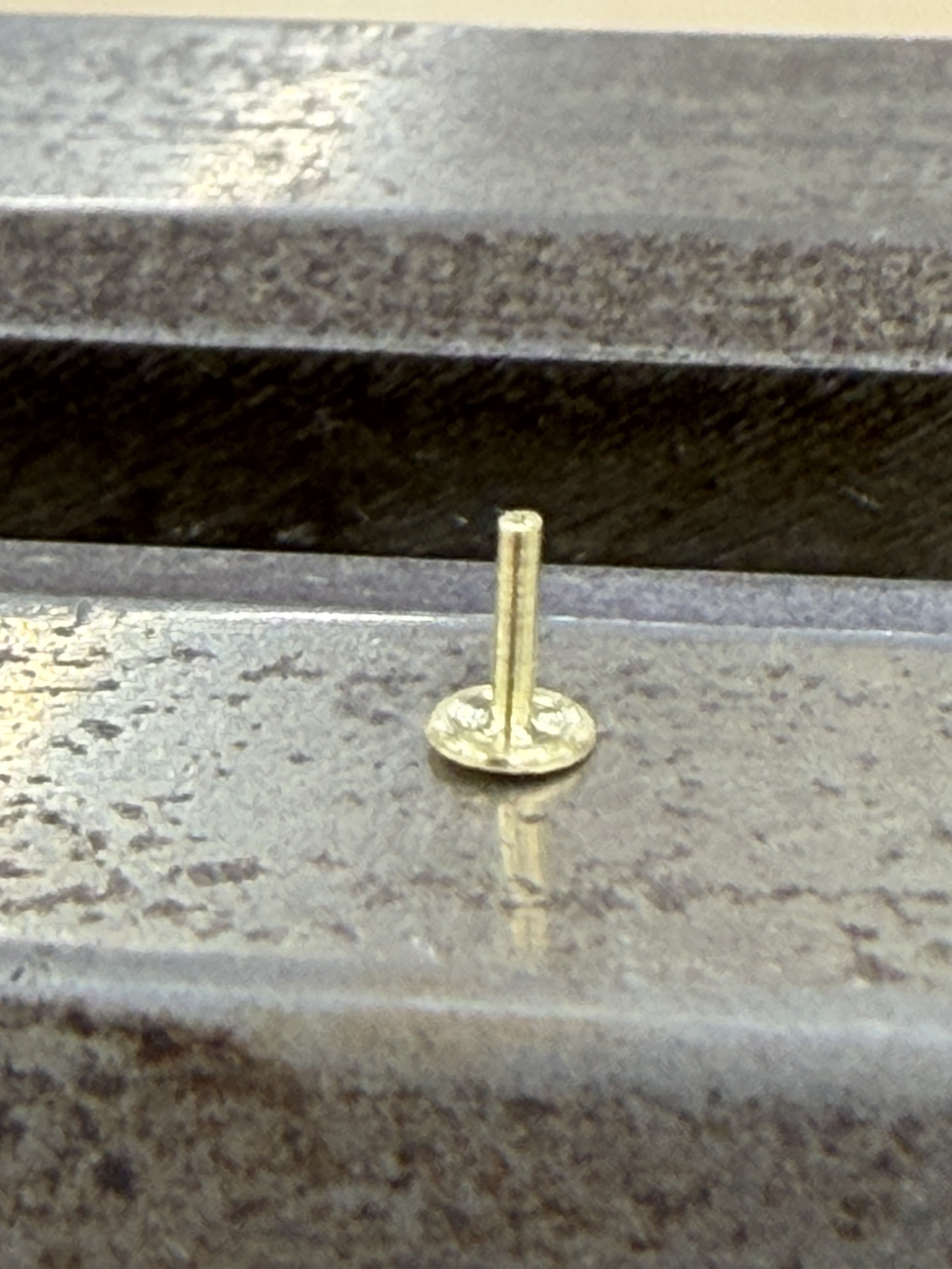
From there, I used Archie Perkins’ book and Philip’s whiteboard drawings as a guide and started practicing stepped cylinders with 90-degree shoulders. The goal was straightforward enough: turn to a controlled diameter, make a square shoulder, and try to leave a decent finish.
Actually doing those things was another matter.
Eventually Marc, who taught the first watch servicing course I took, started egging me on to see how small I could turn a section of brass.
So I kept going.
I stopped at 0.125 mm.
It wasn’t perfect. The polish could have been better and the corners could have been perfectly flat and perpendicular. But there it was: a tiny section of brass, turned by hand with a graver to something approaching the dimensions of a pocket watch pivot.
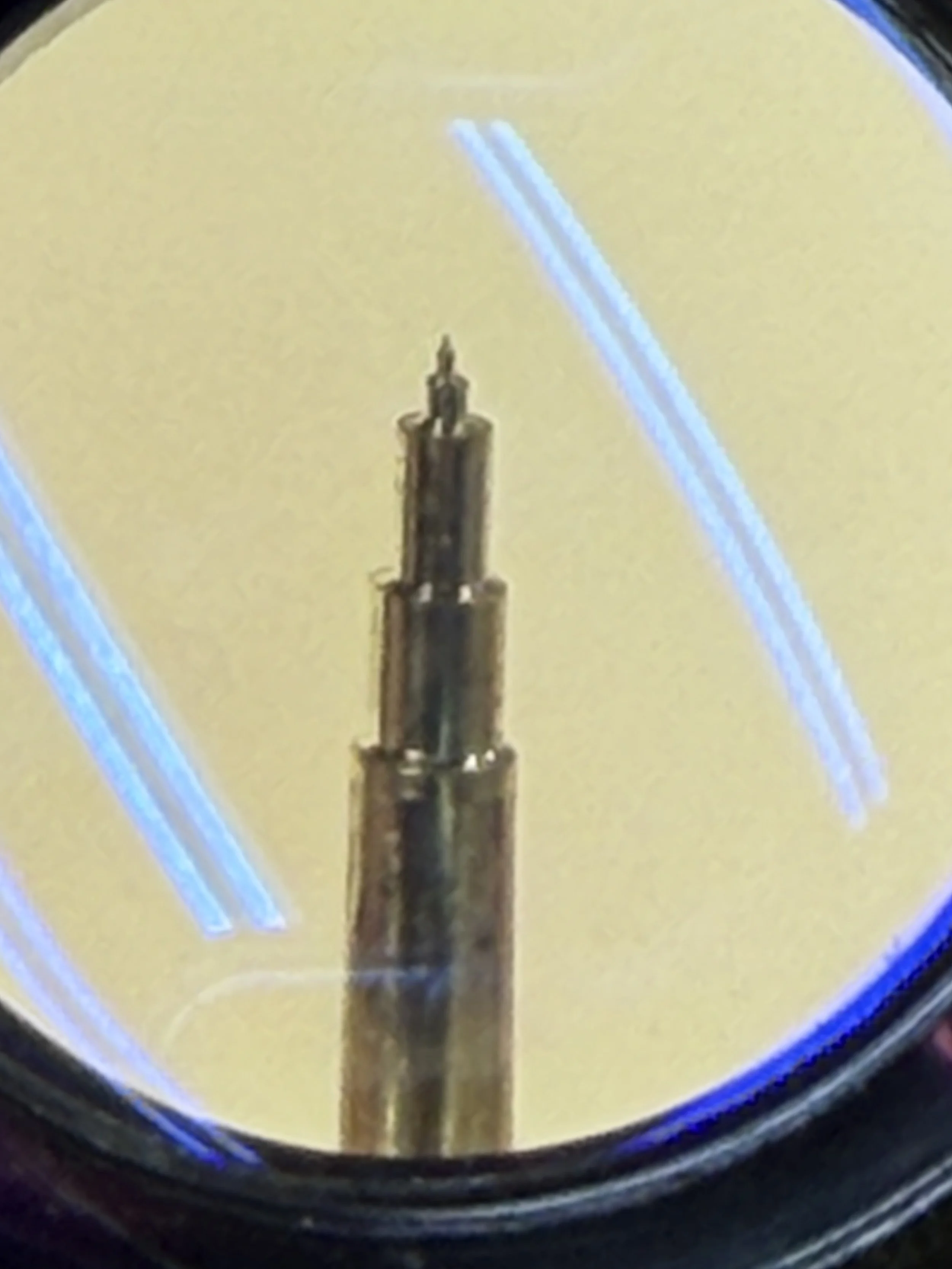
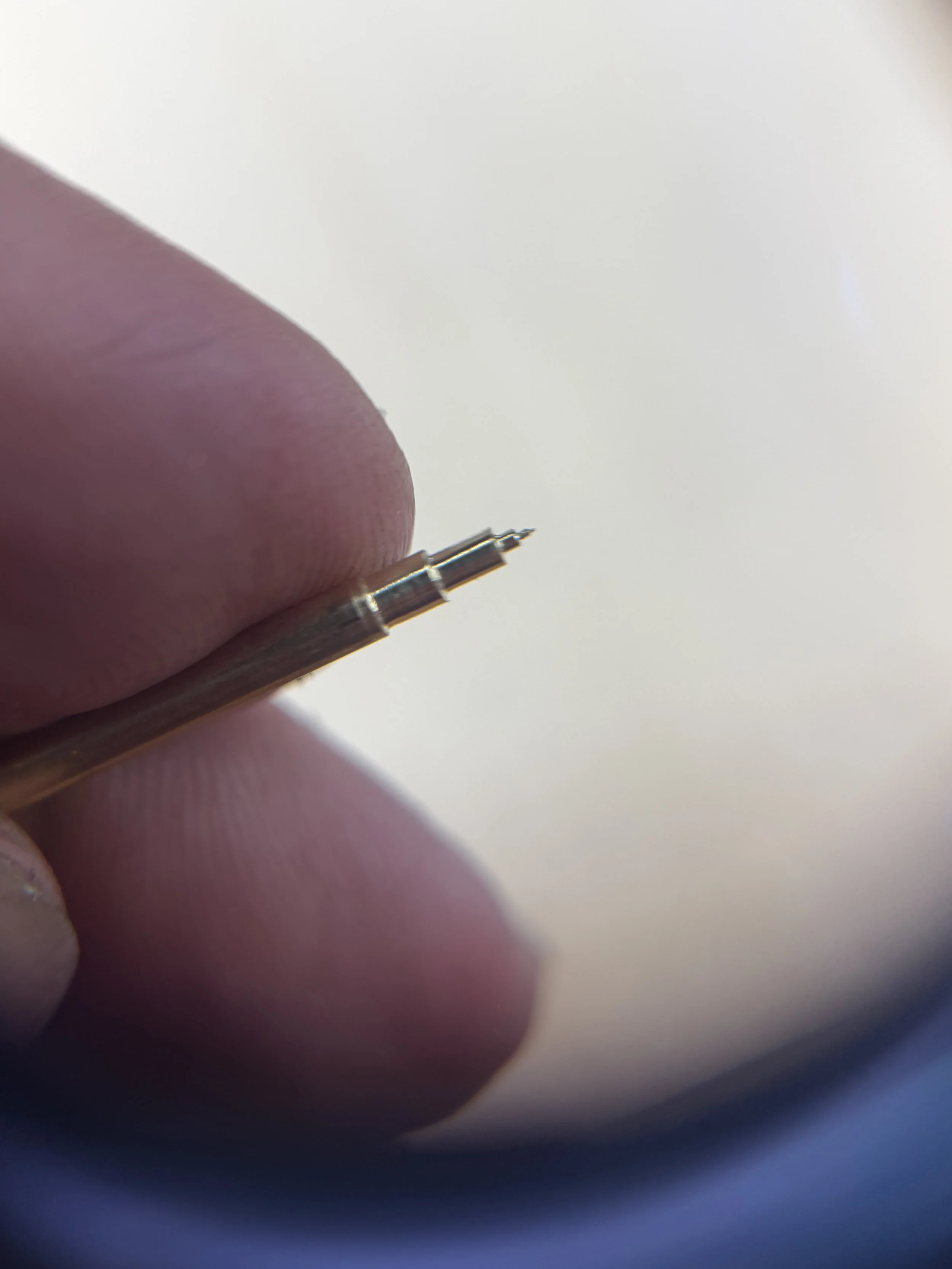
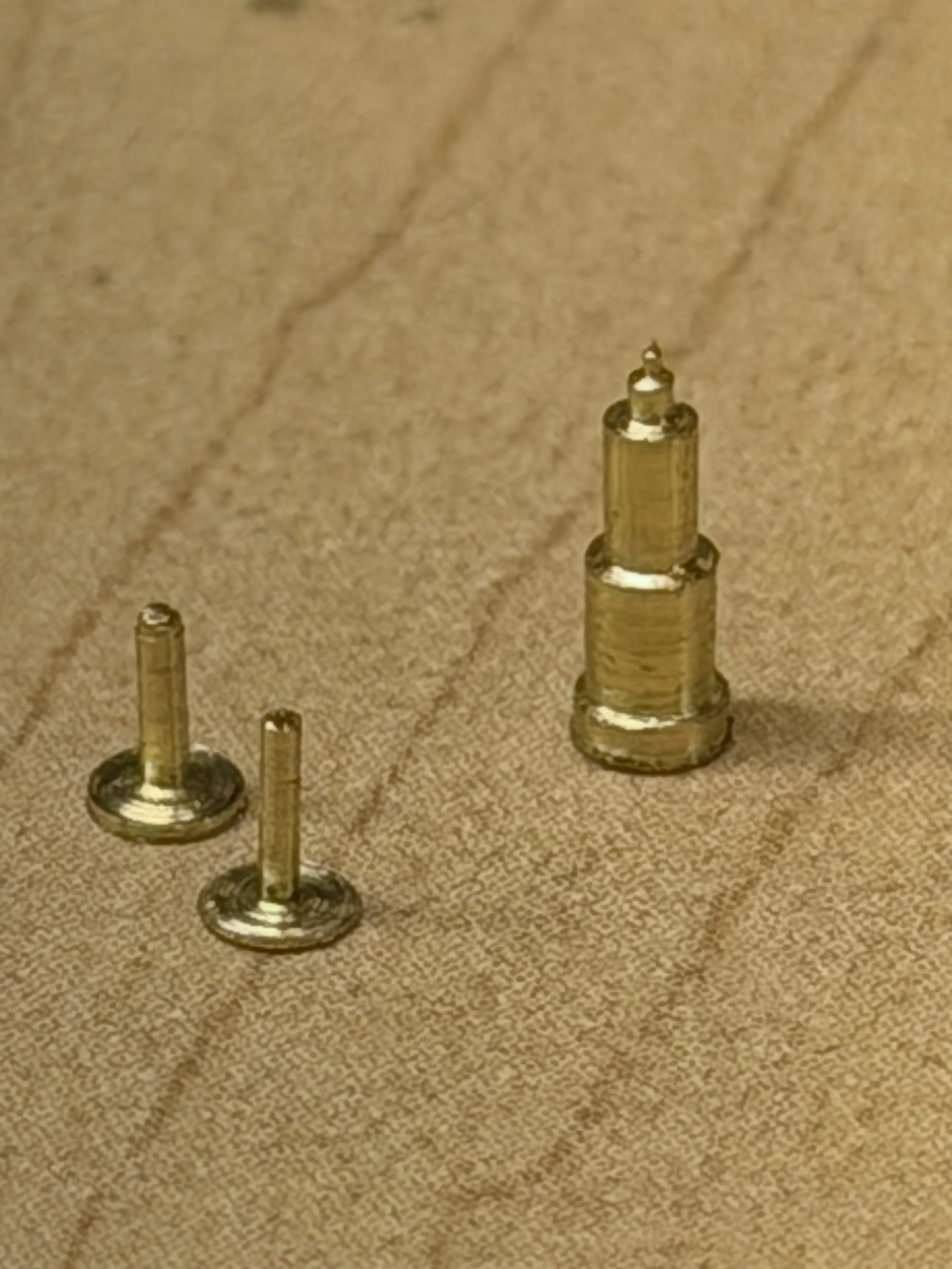
That felt like a huge win. Something I’ve admired from a distance for a long time suddenly felt a little less inaccessible.
With enough practice, maybe this is something I can learn.
The rest of the day had that same feeling.
We would stop what we were doing to watch someone else work, cheer when somebody got something right, marvel at some odd tool or piece of equipment that had made its way into the room, and talk about how what we were learning could be applied to watch and clock repair.
There was a lot of horological knowledge floating around the room, but also a lot of stories.
By the end of the three days, I understood my own lathe considerably better. I had taken it apart, cleaned it, polished it, lubricated it, serviced its motor, welded a belt for it, sharpened gravers, and finally started learning how to actually turn with it.
I also met a group of people with a lot of common interests. There are already conversations about getting together to work and potentially tackling some shared projects.
I came home with a functioning lathe, my first pair of dial feet, a few tiny pieces of turned brass, some new books, and a considerably longer list of things I want to learn.
Most importantly, the lathe sitting on my bench doesn’t feel quite as mysterious anymore.
Now I just need to spend a lot of time making very small pieces of metal even smaller.